


Since the end of the meter running backwards, the question keeps coming back: does investing in photovoltaics still make sense in 2026? The short answer is yes — but for good reasons, which are no longer those of ten years ago. You no longer bet on selling electricity, but on what you consume directly, at the moment the sun is producing. This guide takes stock, backed by real figures.
What has changed: the end of the meter running backwards
For years, residential solar relied on a simple and generous principle: your meter ran backwards when you fed your production surplus to the grid. The grid served as a free “infinite battery”, and the electricity fed back was worth exactly the same price as the one bought.
This mechanism is gradually being switched off. The smart (digital) meter now measures separately what you draw and what you feed in — and these two flows no longer have the same value. That’s the fundamental change of 2026: the electricity you feed back is bought at a tariff far lower than what you pay to buy it. The direct consequence: profitability now hinges on self-consumption.
The prosumer tariff in Wallonia
In Wallonia, residential producers pay a charge known as the prosumer tariff, which pays for the use of the grid as a buffer between production and consumption. It is calculated either as a flat rate based on the inverter’s power, or on the basis of actual consumption recorded by the smart meter — the “proportional” regime often being the most advantageous for those who self-consume well.
This tariff has a bad reputation, but it doesn’t kill profitability: it simply shifts the centre of gravity of the operation towards self-consumption. To understand precisely how it works and its impact on your bill, see our page dedicated to the prosumer tariff.
The real lever of 2026: self-consumption
Self-consumption is the share of your production that you consume directly at home, without going through the grid. It’s what determines profitability, because every self-consumed kilowatt-hour is a kilowatt-hour you don’t buy from your supplier — at the full rate, taxes and charges included.
The gap is considerable. Depending on your supplier, the kilowatt-hour bought costs several times what the kilowatt-hour fed in is worth. In other words, a kilowatt-hour consumed directly earns you far more than a kilowatt-hour resold. The whole art of sizing therefore lies in making production and consumption coincide.
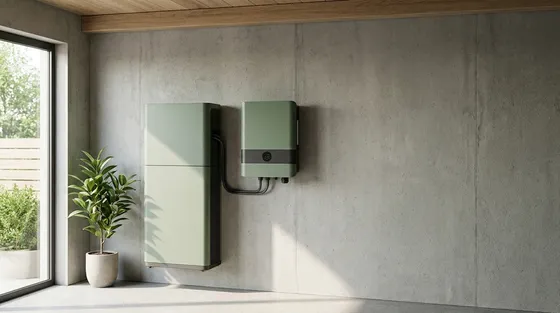
This is the jump in the self-consumption rate when you add a home battery. Without storage, an installation self-consumes on average 35 % of its production; with a well-sized battery, you commonly reach 70 %.
How to maximise your self-consumed share
A few simple habits raise this rate without changing anything about your installation:
- Shift the big loads to daytime — washing machine, dishwasher, tumble dryer scheduled for sunny hours.
- Heat your water with solar — a thermodynamic tank or a solar diverter soaks up the midday surplus.
- Charge your electric car during the day, when possible, rather than at night.
- Size the installation well — an oversized roof produces a poorly valued surplus.
That’s exactly what a solar panel installation designed for 2026 aims for: not to produce the maximum, but to produce as close as possible to what you actually consume.
The budget: how much an installation costs in 2026
The price of photovoltaics has fallen sharply over ten years. In 2026, count around €1,550/kWp for a turnkey residential installation, installation included. For homes over ten years old, the reduced VAT of 6 % applies, which noticeably lightens the bill.
In practice, a typical 4 kWp installation — about ten panels — comes to around €6,000 to €7,000, excluding battery. The final amount depends on the roof’s complexity (slope, orientation, access), the brand of the panels and the inverter, and the possible addition of storage. For detailed ranges, see our solar panel prices guide.
What it produces
Under the Belgian climate, a well-oriented installation produces on average 950 kWh per kWp per year. A 4 kWp installation therefore generates around 3,800 kWh annually — enough to cover a substantial share of a household’s consumption, especially if a good half is self-consumed. Orientation and tilt matter: due south at 35° remains the ideal, but an east-west roof spreads production better across the day, which precisely favours self-consumption.
The profitability calculation, calmly
Let’s put the figures end to end for a representative 4 kWp installation, without a battery:
- Investment: ~€6,200 (€1,550/kWp, VAT 6 % included).
- Annual production: ~3,800 kWh (950 kWh/kWp).
- Self-consumption: ~35 %, i.e. ~1,330 kWh consumed directly.
- Saving on the bill: every self-consumed kWh avoids a purchase at the full rate; the injected surplus is valued, but much less.
By adding up the saving on avoided purchases and the value of the surplus, and deducting the prosumer tariff, the payback time of a well-sized installation averages between 8 and 12 years. Beyond that, the installation keeps producing: the panels are guaranteed 25 years and often work much longer.
“In 2026, you no longer buy panels to resell power: you buy them to stop buying any. It’s this reversal that keeps the operation profitable.
The net gain over 25 years
Over the whole lifespan, the balance remains very favourable. Once the installation is paid off — say after ten years — the remaining fifteen years produce almost free electricity. Cumulated over 25 years, the net gain runs into thousands of euros for an average residential installation, not counting protection against rising energy prices: every self-produced kilowatt-hour is a kilowatt-hour shielded from tariff inflation.
The role of the battery
The home battery is a game changer for self-consumption: it stores the midday surplus to release it in the evening, raising the self-consumption rate from ~35 % to ~70 %. That’s welcome, especially if your consumption is concentrated in the evening, after work.
But it has a cost, and its own payback time is longer than that of the panels alone. The battery is therefore worthwhile mainly for a consumption profile heavily skewed towards the evening, a quest for independence, or in anticipation of more dynamic grid tariffs. It’s not a must: many installations remain perfectly profitable without storage. To decide for your case, read do you need a battery?.
And what about grants?
The landscape of support has evolved with the gradual end of support for simple feed-in, but levers remain: reduced VAT of 6 % for older buildings, regional grants that fluctuate with available budgets, and specific support for storage in some regions. As these grants change every year, it’s better to check the amounts in force at the time of your project rather than rely on a fixed figure — which is precisely why this guide is updated annually.
Production, self-consumption rate, payback time and gain over 25 years: enter your roof and your consumption, and the simulator does the calculation with the 2026 parameters.
Launch the profitability simulator →So, profitable or not?
Yes — but the profitability of 2026 is no longer that of the meter running backwards. It’s earned through good sizing and careful self-consumption. An installation designed to match your consumption pays for itself in 8 to 12 years and then produces almost free electricity for another fifteen years, while protecting you from rising prices.
The real question is therefore no longer “is it profitable?” but “how do I maximise my self-consumed share?”. That’s where profitability is won or lost, and it’s precisely what serious sizing and an honest simulator let you optimise.
The 30-second recap
- The meter running backwards is disappearing: profitability now hinges on self-consumption, not resale.
- The prosumer tariff doesn’t kill profitability — it rewards those who consume their own production.
- An installation pays for itself on average in 8 to 12 years, for 25 years of lifespan and more.
- Count ~€1,550/kWp (VAT 6 %) for ~950 kWh/kWp produced per year.
- The battery raises self-consumption from 35 % to 70 %, but isn’t essential to profitability.
Guide reviewed in May 2026 · updated every year