

Underfloor heating: even, invisible, low-temperature comfort
Hydronic underfloor heating spreads warmth through the floor at low temperature (30–35 °C). The result: a uniquely warm-underfoot comfort, no visible radiators, and a maximum heat pump efficiency (the lower the water, the higher the SCOP). In summer, it can even cool passively.
- 30–35 °C
- water temperature
- Invisible
- no radiators
- SCOP +
- maximum heat pump efficiency
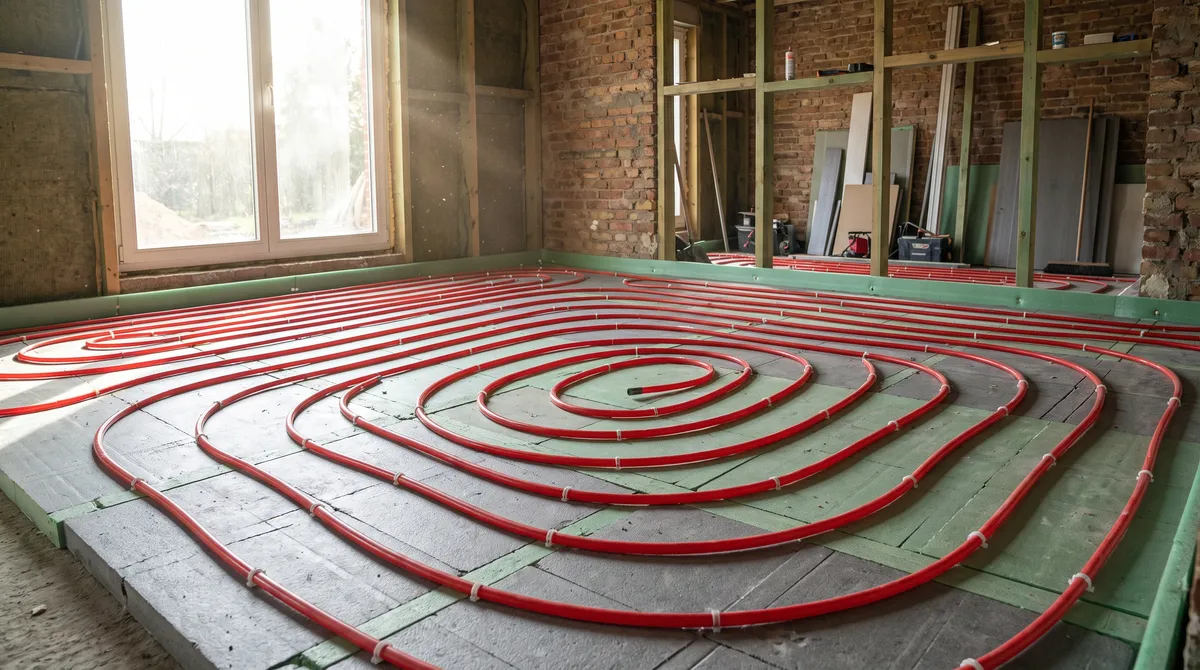
What underfloor heating is really worth
The figures that matter for quality underfloor heating, installed by our teams.
- Water temperature 30–35 °C
Water at 35 °C is enough to heat the entire surface. The lower the temperature, the higher the heat pump efficiency (SCOP).
- Emission surface The whole floor
Heat is spread across the entire floor surface: even distribution, no hot spots or cold zones.
- Visibility Zero
No radiators, no visible convection. Walls are free for layout and decoration.
- Cooling Passive option
In summer, cool water circulates through the circuit: a 2–4 °C cooling effect, no compressor, virtually free (especially with geothermal).
- Floor build-up 8–10 cm
The system’s thickness (insulation + pipes + screed) adds 8 to 10 cm of floor build-up. To plan for in renovations.
- Thermal inertia High
Underfloor heating has high inertia: it warms up and cools down slowly. Ideal for stable comfort, less suited to fast heating needs.
* Indicative values for a standard hot water system. Performance depends on the floor insulation and the floor covering.
Pros & cons of underfloor heating
Underfloor heating is the ideal emitter for a heat pump, but it has its constraints.
Where it shines
- Maximum heat pump SCOPLow-temperature water (30–35 °C) lets the heat pump run at its best efficiency.
- Even, warm-underfoot comfortHeat rises from the floor: uniform distribution, no hot spots.
- No visible radiatorsWalls are free for layout. No convectors, no grilles.
- Passive cooling possibleIn summer, cool water in the circuit provides a slight, free cooling effect.
What you should know
- Floor build-up (8–10 cm)In renovation, the build-up can create issues with ceiling height or thresholds.
- Ideal for new builds or major renovationsInstallation requires redoing the floor. Hard to add without significant works.
- High inertiaThe floor takes time to warm up and cool down. Not suited to fast heating needs.
- Floor covering to choose carefullyTiles and stone are perfect. Thick solid parquet is less ideal (it insulates).
Is underfloor heating right for you?
It comes into its own when you build or redo the floor. Three common cases:
-
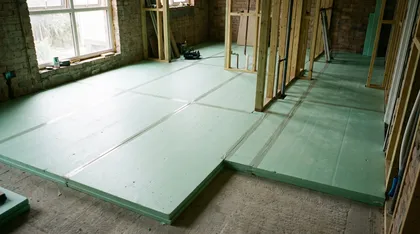
New build
The ideal moment: underfloor heating sits within the slab with no extra build-up. Paired with a heat pump, it’s the standard for new homes.
-
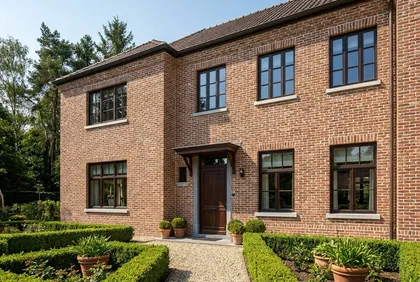
Major renovation
When the floor is redone from scratch (extension, full renovation), it’s the chance to fit underfloor heating with no extra demolition cost.
-
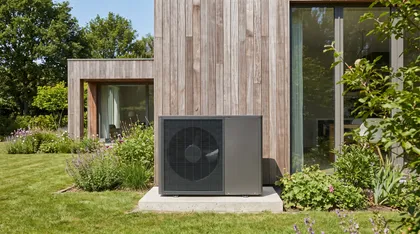
Pairing with a geothermal heat pump
The underfloor heating + geothermal duo is the best performer: low-temperature water, record SCOP and passive geocooling in summer.
Low-temperature radiators are the alternative: they also work with a heat pump, without touching the floor. Paired with a high-temperature air-to-water heat pump, your existing radiators can also do the job.
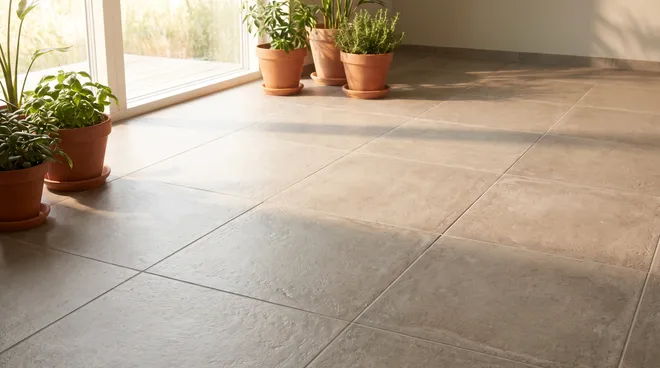
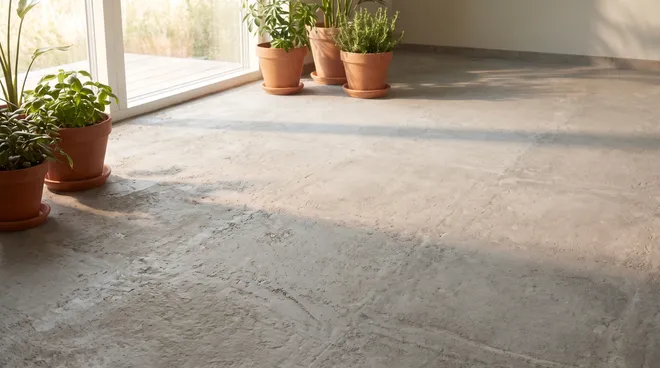
Underfloor heating + air-to-water heat pump: maximum comfort, minimal bill
A new 150 m² home with an air-to-water heat pump and underfloor heating across the whole surface. Water at 32 °C, a measured SCOP of 4.6, even warm-underfoot comfort. No visible radiators, walls entirely free.
- SCOP 4.6measured efficiency
- 32 °Cwater temperature
- 0 radiatorsvisible
Underfloor heating, LT radiators or convectors?
The emitter determines the heat pump’s efficiency and how comfortable it feels.
| Critère | Underfloor heatingVous êtes ici | LT radiatorsVoir la gamme → | Conventional radiatorsVoir la gamme → |
|---|---|---|---|
| Water temperature | 30–35 °C | 40–45 °C | 55–70 °C |
| Heat pump SCOP | The highest | Very good | Reduced |
| Comfort | Warm underfoot, even | Good | Convection |
| Visibility | Invisible | Wall radiators | Wall radiators |
| Installation | Floor to redo | Simple swap | Already in place |
| Cooling | Passive option | No | No |
| Ideal for | New build, major renovation | Renovation, replacement | Existing, hybrid |
- the ideal heat pump
Air-to-water heat pump
Paired with underfloor heating, air-to-water delivers the best SCOP.
See air-to-water → - premium combo
Geothermal
The underfloor heating + geothermal duo = record efficiency + free geocooling.
Discover geothermal → - prerequisite
Floor insulation
Underfloor heating without floor insulation loses heat downwards. Insulate first.
See floor insulation → - compatible
Hybrid heat pump
A hybrid also works with underfloor heating for optimal comfort.
See hybrid → - budget
Prices & grants
Price ranges for installed underfloor heating and the related heat pump grants.
See prices → - ↑ category
All heat pumps
An overview of our heat pump solutions in Belgium.
Back to the heat pump guide →
How much does underfloor heating cost?
The price depends on the surface area, the type of insulation and the screed. Here are some benchmarks for an installed system.
See full heat pump prices & grants →* Indicative ranges for installed hydronic underfloor heating, excluding the heat pump. The heat pump is billed separately.
- Underfloor heating €40–75/m²pipes + insulation + installation
- Screed €15–25/m²liquid anhydrite screed
- 100 m² surface €5,500–10,000underfloor heating + screed, installed
- Reduced VAT 6%for renovation (home > 10 years old)
Your questions about underfloor heating
Is underfloor heating compatible with all floor coverings? +
Tiles and stone are ideal (good thermal conductivity). Engineered parquet also works. Thick solid parquet and thick carpet slow heat transfer. We advise on the covering during the survey.
Can underfloor heating be installed in a renovation? +
Yes, if the floor is being redone (stripping the existing one or an extension). The 8–10 cm build-up must be planned for: ceiling height, thresholds, steps. In new builds, the floor heating sits within the slab with no problem.
Does underfloor heating warm up quickly? +
No, that’s its inertia: it takes several hours to reach temperature. But once warm, it delivers stable, continuous heat. It’s controlled by a room thermostat rather than in bursts.
Can you cool with underfloor heating? +
Yes, by circulating cool water through the circuit (geocooling with a geothermal heat pump, or well water). The gain is 2 to 4 °C — gentle cooling, not air conditioning.
Do I need to insulate the floor under the heating? +
Absolutely. Without insulation, heat goes down into the subfloor instead of up. An insulation layer of 6 to 10 cm (PUR, XPS) under the pipes is essential.
Does underfloor heating raise the heat pump’s SCOP? +
Yes, significantly. The lower the water temperature, the more efficient the heat pump. With underfloor heating at 32 °C, the SCOP rises by 0.5 to 1 point compared with radiators at 55 °C.
Get your free underfloor heating quote within 48h
Free site survey, precise sizing, grants calculated. Describe your project in under a minute.
- Free with no obligation
- Sized to your heat pump
- Installed by our certified technicians