

Solar roof: is your roof made for panels?
The roof is the first factor in solar production: orientation, pitch, shading and the condition of the covering all determine returns. South is ideal, east/west is viable, and a flat roof adapts with tilted mounts. We assess your roof free of charge before any quote.
- South
- ideal orientation
- 30–35°
- optimal pitch
- Tiles · slate · flat
- all coverings
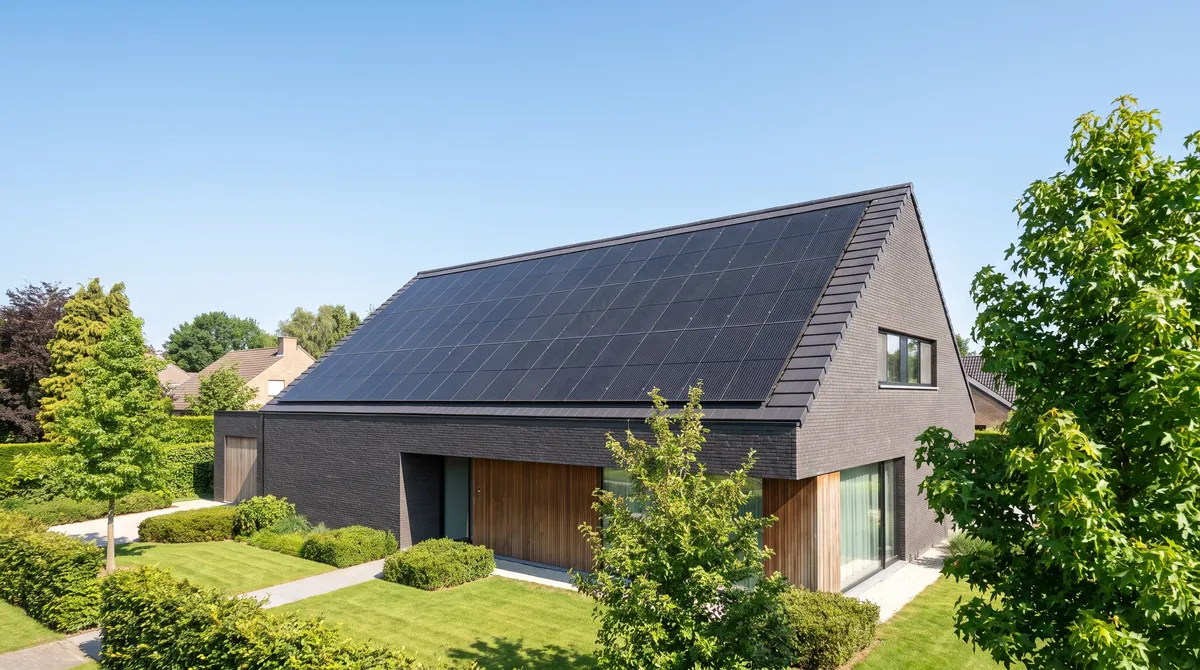
What makes your roof good or bad for solar
Six factors determine the output of your panels. Here’s how to assess them.
- Orientation South = 100%
Due south produces the maximum. East or west = 85–90%. South-east/south-west = 95%. North = not recommended (only 50–60%).
- Pitch 30–35°
The optimal pitch in Belgium is 30 to 35°. Slopes from 15° to 50° remain highly productive. Flat roof = tilted mounts.
- Shading To avoid
A chimney, tree or neighbouring building: shade sharply reduces output. Optimisers soften the impact, but the ideal is a clear roof.
- Covering Tiles · slate · flat
The mounting adapts to each covering: tile hooks, slate brackets, ballast or membrane fixing on a flat roof. Zinc and EPDM too.
- Roof condition To be checked
Panels last 25–30 years. If the covering needs redoing within 5 years, it’s best to deal with that first. We check the condition before installing.
- Available surface ~1.8 m²/panel
A panel takes up about 1.8 m². For 6 kWp (14–15 panels), you need ~27 m² of clear roof.
* Indicative benchmarks. The precise assessment is done on site, measuring shading and surface area.
Each type of roof has its strengths
Pitched or flat, both suit solar. Here are the differences.
Pitched roof (the most common)
- Natural pitchNo need for mounts: the panels follow the slope.
- Optimal output if due southThe orientation is set by the roof — if it’s south, it’s ideal.
- Discreet integrationThe panels hug the roof and are barely visible from the street.
- Less soilingThe slope helps water run off and naturally cleans the panels.
Flat roof (common in cities)
- Free orientationTilted mounts let you aim south even on an east/west roof.
- Bifacial possibleThe space beneath the raised panels allows a bilateral gain.
- No permit (generally)On a flat roof, the panels aren’t visible: a permit is rarely required.
- Easy accessMaintenance and cleaning are simpler than on a steep slope.
Does my roof suit panels?
Three common configurations in Belgium and their solar potential:
-
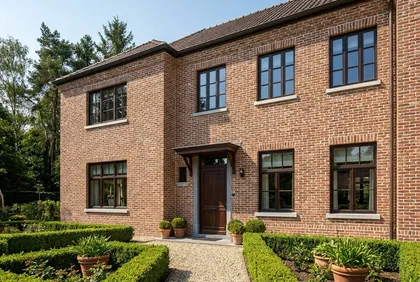
Classic home, south-facing slope
The ideal case: a clear south-facing slope of 30–40°. Maximum output, fast installation, optimal returns.
-
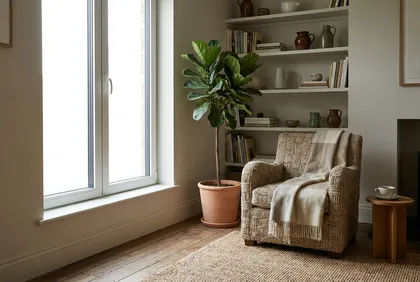
Flat roof (flat, cube-shaped home)
Common in cities. The panels sit on south-facing tilted mounts, ballasted or fixed to the membrane. Usually no permit needed.
-
East-west double pitch
Panels on both sides: less output per panel, but production spread more evenly across the day. Good for self-consumption.
In Wallonia, roof-mounted panels are generally exempt from a permit if the building isn’t listed and the panels don’t protrude. In Brussels, the rules differ. We check for you before the quote. Combine it with the right solar kit.
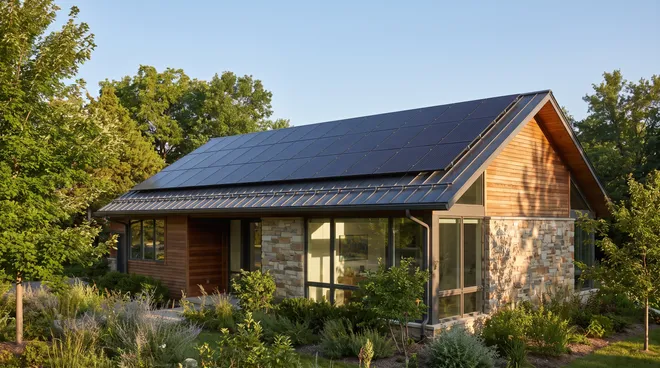
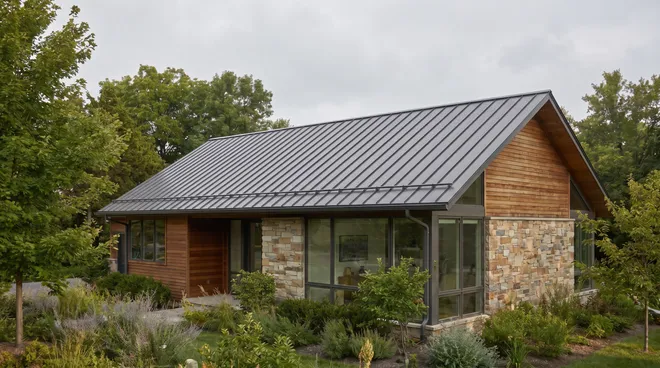
A south-facing 35° roof, no shading: the ideal case
The customer was hesitating: was their roof well enough oriented? Our assessment confirmed a perfect south orientation at 35°, with no shading. A 6 kWp kit installed in a single day, with estimated annual output of 5,800 kWh — above the Belgian average.
- South 35°optimal orientation
- 5,800 kWhannual output
- 0 shadingclear roof
South, east-west or flat roof?
Output varies with orientation and the type of roof.
| Critère | South roofVous êtes ici | East/west roofVoir la gamme → | Flat roofVoir la gamme → |
|---|---|---|---|
| Annual output | 100% (reference) | 85–90% | 90–95% (tilted mounts) |
| Daily consistency | Midday peak | More spread out | Midday peak (south-facing) |
| Self-consumption | Good | Better (morning + evening) | Good |
| Permit | Rarely | Rarely | Very rarely |
| Aesthetics | Visible | Two slopes | Invisible |
| Maintenance | Natural cleaning | Natural cleaning | Regular cleaning |
| Ideal for | Maximum output | Self-consumption, 2 slopes | City, discretion, bifacial |
- all-in-one
Solar kit
The kit tailored to your roof: panels, inverter and bespoke mounting.
See the kits → - the tech
Panel types
Mono N-type, bifacial: the right panel for your type of roof.
Compare the types → - the brain
Inverter
String, micro or hybrid: matched to your roof configuration.
See the inverters → - if shading
Optimisers
In case of partial shading, optimisers free up each panel.
See the optimisers → - to combine
Battery
Store the surplus for the evening, whatever the type of roof.
See the batteries → - ↑ category
All things solar
An overview of our solar panels across Belgium.
Back to the solar guide →
Roof assessment and installation cost
Assessing your roof is free. The installation cost depends on the type of covering and the complexity of the mounting.
See prices for complete solar kits →* The type of covering affects the mounting cost, which is included in the kit price.
- Roof assessment Freetechnical visit before the quote
- 6 kWp kit, pitched roof €6,000–9,000tile/slate fixing included
- 6 kWp kit, flat roof €6,500–9,500ballasted mounts included
- Reduced VAT 6%for renovation (home > 10 years old)
Your questions about the solar roof
My roof faces east-west, is it worth it? +
Yes. An east or west orientation produces 85 to 90% of a south roof. Output is more spread across the day (morning + afternoon), which favours self-consumption. We put panels on both sides.
My roof is slate, is it compatible? +
Absolutely. Fixing is done with hook brackets slid under the slates, without piercing the covering. Tiles, slate, zinc, EPDM, steel decking: each covering has its proven fixing system.
Do you need a permit to install panels? +
In Wallonia, panels mounted on top of an unlisted building are generally exempt. In Brussels, a prior declaration may be required. On a flat roof, panels invisible from the street are rarely subject to a permit. We check for you.
My roof is shaded at certain times, is that a problem? +
It depends on the extent and duration of the shade. Light shading (a chimney late in the day) is handled with optimisers. Dense, permanent shading reduces returns too much. We measure precisely on site.
Should the roof be redone before installing panels? +
If the covering needs to be redone within the next 5–10 years, it’s best to do it before installation (otherwise the panels would have to be removed). We assess the condition during the technical visit.
Do panels damage the roof? +
No. On-top mounting doesn’t pierce the watertight covering. The hooks slide under the tiles or slates. On a flat roof, the ballast doesn’t pierce the membrane. We guarantee watertightness.
Free assessment of your roof within 48 hours
Free technical visit, orientation and shading measurement, costed quote. Describe your project in under a minute.
- Free and with no obligation
- Orientation + shading assessment
- Costed quote after the visit