

Production tracking: watch your solar panels produce in real time
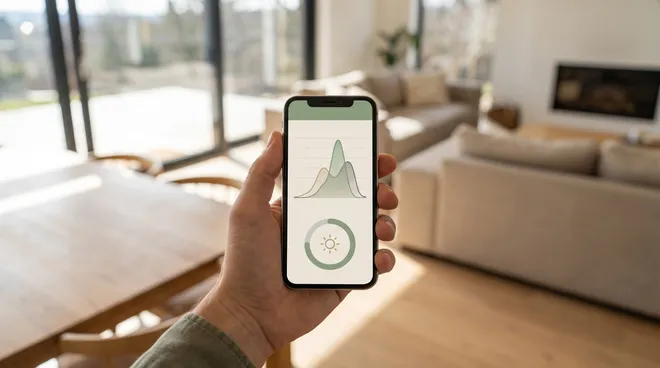
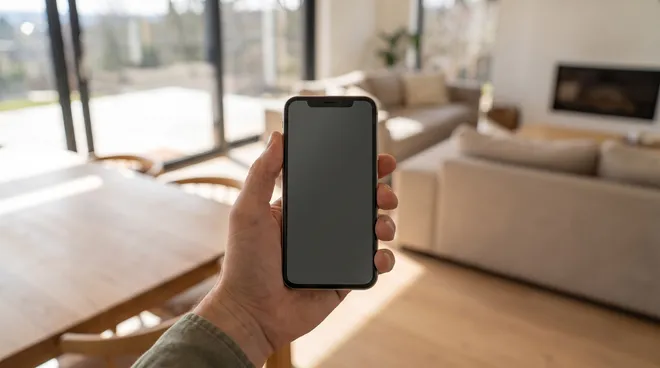
A photovoltaic installation without tracking is like driving without a speedometer. The monitoring app shows your panels’ production (kWh), the share you self-consume, the surplus injected to the grid and alerts you the moment efficiency drops. You check your profitability and drive your energy instead of just enduring it.
- Live kWh
- instant production
- Self-use %
- share consumed on site
- Per panel
- with optimisers/micros
What good monitoring really measures
The functions that count for driving a photovoltaic installation, not just watching it. Concrete benchmarks, no marketing.
- Real-time tracking Live kWh
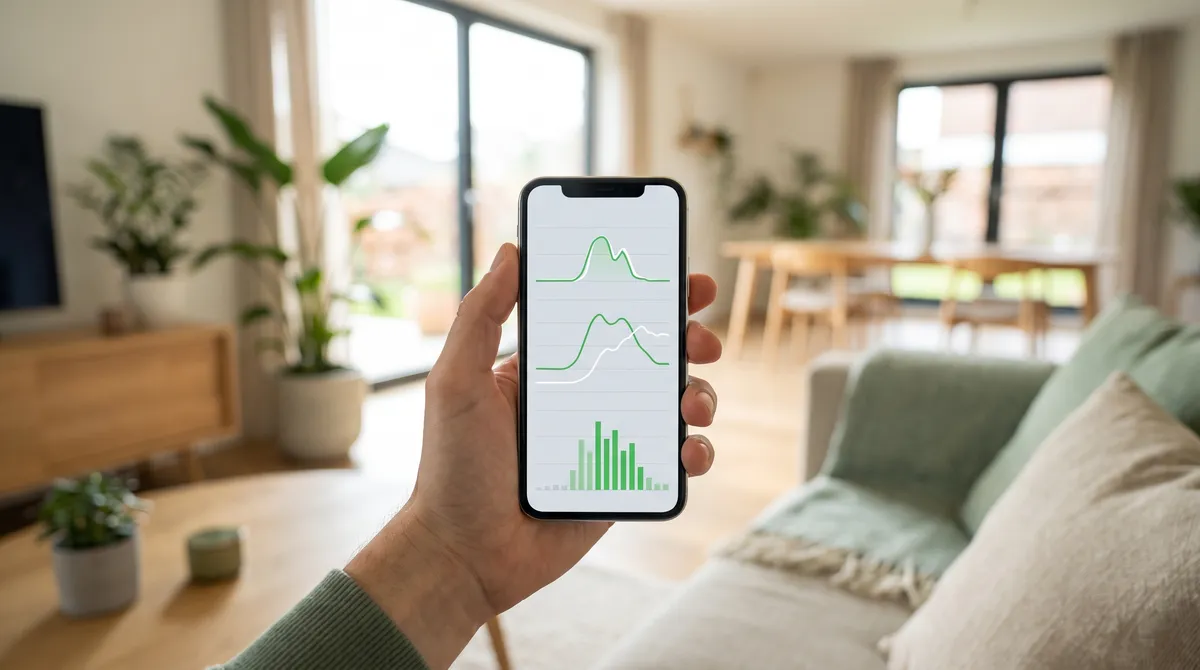
The app shows the instantaneous power and the energy produced minute by minute. You see the effect of a cloud, a season or shading immediately, on smartphone as on computer.
- Self-consumption Share in %
Monitoring distinguishes what you consume on site from what you inject. Knowing your self-consumption rate is the key to making an installation profitable: every kWh consumed is worth far more than a kWh sold.
- Failure detection Auto alert
In case of a drop in efficiency, a stopped inverter or a fault, the app sends a notification. Without tracking, a failure can go unnoticed for months and cost you hundreds of euros in lost production.
- Per-panel tracking Module by module
With micro-inverters or optimisers, monitoring drills down to each panel. You pinpoint exactly the soiled, shaded or faulty module, where inverter tracking only sees the total.
- History & reports Day → year
Curves by day, month and year, comparison between periods and exportable reports. Enough to track the panels’ normal degradation over time and prove the installation’s profitability.
- Load control Driven surplus
Advanced solutions trigger your big loads (EV charger, heat pump, water tank) when the solar surplus is available, to self-consume instead of injecting.
* Available functions depend on the equipment installed (inverter brand, presence of micro-inverters or optimisers, metering gateway). We choose together the configuration suited to your goals.
Pros & cons of monitoring
Production tracking changes the way you live with your installation, but it also has its dependencies. Here, honestly, is what it brings and what to keep in mind.
Where its strength lies
- Detects a drop in efficiencyA failure or a flagging panel is spotted right away, not after months of lost production.
- Maximises self-consumptionSeeing your surplus in real time, you shift your loads to the right moment and save more.
- Proves profitabilityThe figures in the reports show what the installation produces and earns, year after year.
- Remote controlEverything is accessible from the smartphone, wherever you are, with no extra hardware to handle.
What to keep in mind
- Depends on the equipmentPer-panel tracking requires micro-inverters or optimisers; inverter-only tracking stays at the global level.
- Subscription sometimes neededSome brands reserve advanced functions or long history for a paid subscription.
- Internet connection requiredOnline tracking needs a connected box or gateway; an internet outage interrupts the data feed.
- Doesn’t fix anything by itselfMonitoring flags a problem but doesn’t repair it: you still need to plan maintenance or an intervention.
Is monitoring right for you?
As soon as you install solar panels, tracking their production makes sense. Three situations where it quickly becomes essential:
-

Check profitability
You want to know whether your installation lives up to its promises. Monitoring quantifies the real production and compares it to the forecasts, in euros as in kWh.
-

Detect a faulty panel
A shaded, soiled or failed module quietly drags down efficiency. Per-panel tracking points precisely at the culprit for a targeted intervention.
-
Drive self-consumption
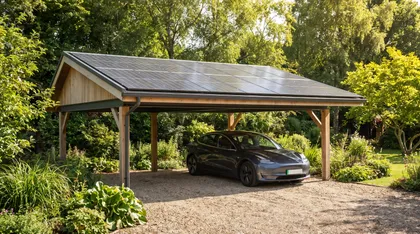
Charging your car, heating water or the home with the solar surplus: monitoring triggers your appliances at the right moment to consume what you produce.
For module-by-module tracking, you need micro-inverters or optimisers. With a central inverter alone, tracking stays at the level of the whole installation — often enough for a roof without shading.
An inverter failure spotted in 24h thanks to monitoring
A client had 16 panels fitted without tracking. When adding a battery, we installed optimiser-based monitoring. The very next day, the app flagged two modules shaded by a chimney and, a few weeks later, a stopped inverter — detected in 24h instead of several months of lost production.
- 24hto detect the failure
- +12%driven self-consumption
- 16panels tracked one by one
Which level of monitoring to choose?
From simple inverter tracking to full energy control, three levels depending on your needs and your equipment. Compare them, then open the solution that interests you.
| Critère | Inverter tracking (string)Vous êtes ici | Per-panel trackingVoir la gamme → | Monitoring + controlVoir la gamme → |
|---|---|---|---|
| Level of detail | Whole installation | Panel by panel | Global + appliances |
| Failure detection | Inverter only | Precise module | Complete |
| Self-consumption tracking | With a gateway | With a gateway | Built in and driven |
| Load control | No | Limited | Yes, automatic |
| Equipment required | Central inverter | Micros/optimisers | Battery + gateway |
| Indicative cost | Often included | Equipment surcharge | Full investment |
| Ideal for | Simple roof, no shade | Shading, fine tracking | Advanced self-consumption |
- at the base
Solar inverter
The heart of the installation and the first source of tracking data. Its built-in portal already shows the global production.
See the inverters → - fine tracking
Micro-inverters
One micro-inverter per panel: tracking drills down to the module and neutralises the effect of a shaded panel on the others.
Discover micro-inverters → - fine tracking
Power optimisers
The alternative for per-panel tracking and better efficiency under partial shading, on a central inverter.
See optimisers → - to combine
Solar battery
Store your surplus to consume it in the evening. Monitoring then drives charge and discharge to maximise self-consumption.
Discover the battery → - to combine
Panel maintenance
Monitoring detects the problem, maintenance solves it: cleaning, inverter check and return to service after an alert.
See maintenance → - ↑ category
Solar panels
An overview of photovoltaics in Belgium: panels, inverters, battery, subsidies and self-consumption on one page.
Back to the solar guide →
How much does production tracking cost?
Basic monitoring is often included with the inverter. The surcharge concerns per-panel tracking, self-consumption metering and advanced control. Here are benchmarks.
Request a monitoring quote →* Indicative ranges for installed equipment, excluding specific configuration. Detailed estimate during your free quote.
- Inverter tracking often includedbrand portal and app
- Self-use gateway from €150injection/consumption metering
- Per-panel tracking equipment surchargemicro-inverters or optimisers
- Advanced control on quotetriggering of loads
How do I track my solar panels’ production? +
Via the app or web portal supplied with your inverter. Once the box or gateway is connected to the internet, you view production in real time in kWh, the history by day, month and year, and you receive alerts. It’s all done from a smartphone or a computer.
Is the tracking app included? +
Basic production tracking is generally included with the inverter, at no charge. Some brands reserve advanced functions (long history, detailed reports, self-consumption metering) for a subscription or an extra gateway. We tell you what’s included with your equipment.
Can production be tracked panel by panel? +
Yes, provided you have micro-inverters or power optimisers. Monitoring then drills down to each module and lets you pinpoint a soiled, shaded or faulty panel. With a central inverter alone, tracking stays global to the whole installation.
Does monitoring detect a failure? +
Yes. In case of an abnormal drop in efficiency, a stopped inverter or a fault on a module, the app sends a notification. That’s the main benefit of tracking: without it, a failure can go unnoticed for months and represent hundreds of euros in lost production.
How do I measure my self-consumption? +
You need a gateway or metering device installed at the electrical panel, which distinguishes the energy consumed on site from that injected to the grid. The app then shows your self-consumption rate as a percentage, the key benchmark for making a solar installation profitable.
Is monitoring compatible with my charger or my heat pump? +
Advanced control solutions can trigger your big loads — EV charger, heat pump, water tank — when your solar surplus is available. Compatibility depends on the brands involved; we check the coherence of the whole setup together at the survey.
Get your free solar monitoring quote within 48h
Production tracking, self-consumption metering and control suited to your installation. Describe your project in under a minute.
- Free and with no obligation
- Solution suited to your equipment
- Installation and configuration by our technicians