

Home battery: complete storage for your home
The home battery is the complete system: storage modules, management electronics, a wall enclosure and monitoring. It turns your solar installation into a self-sufficient ecosystem. BYD, Huawei LUNA, SolarEdge: we install the benchmark brands of the Belgian market.
- 5 → 15 kWh
- modular
- Wall
- or floor-standing
- Monitoring
- real-time app
What a home battery includes
A home battery is more than just cells: it’s a complete system.
- Modules Stackable
Modular systems (BYD HVS/HVM, Huawei LUNA2000) let you stack modules of 2.5 to 5 kWh. You size it at the start and expand later if needed.
- Capacity 5–15 kWh
From 5 kWh (small household) to 15 kWh+ (large family or EV). The optimal capacity depends on your evening consumption and the size of the solar installation.
- Monitoring Dedicated app
Real-time tracking of charging, discharging, self-consumption and export. Every kWh is traced.
- BMS Built-in
The Battery Management System monitors each cell: temperature, voltage, current. Protection against overcharge, over-discharge and overheating.
- Footprint Wall or floor
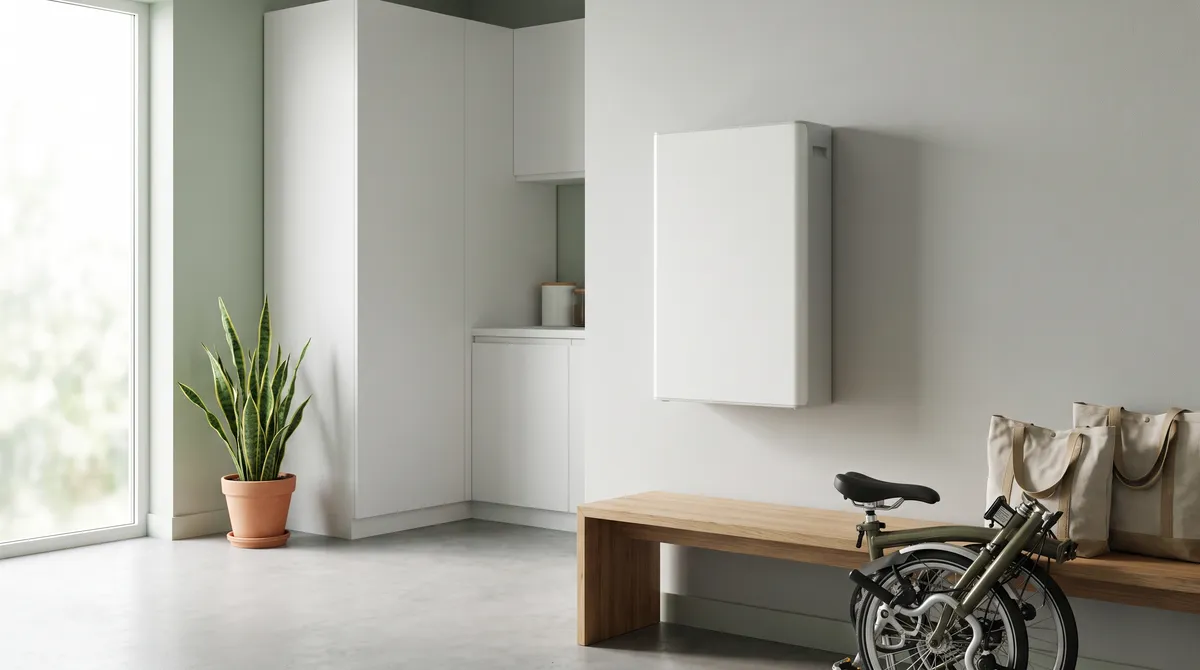
Compact format, wall-mounted or floor-standing. Typical dimensions: 60×70×20 cm for 10 kWh. Fits in a garage, utility room or cellar.
- Power 2.5–5 kW
The discharge power determines how many appliances the battery can run at once. 5 kW is enough for most of a household.
* Indicative values for mainstream-grade systems. The exact model is chosen based on your configuration.
Pros & cons of the home battery
A home battery is an investment that pays off under certain conditions.
What makes it strong
- Maximum self-consumptionThe midday solar surplus powers your evenings and nights.
- Modular and scalableYou start small and add modules as your needs evolve.
- Smart monitoringThe app tracks every kWh: production, storage, consumption, export.
- Backup possibleWith an EPS hybrid inverter, the battery keeps your circuits running during outages.
What you should know
- Significant investmentThe complete system (battery + hybrid inverter) represents a real budget.
- Installation spaceA ventilated, frost-free, accessible wall. Garage, utility room or cellar.
- Returns tied to your profileThe gain depends on your evening consumption and the export tariff.
- Lifespan < panelsThe battery lasts 10–15 years vs 25–30 for the panels. To factor into the calculation.
Is a home battery right for you?
Home storage pays off for certain profiles. Three common cases:
-

Family consuming in the evening
Washing machine, cooking, lighting, TV: if most of your consumption falls after 6 pm, the battery stores the solar surplus for that moment.
-
Need for backup
Fridge, freezer, internet, lighting: a battery with backup keeps your essential circuits running during outages.
-

An installation built to grow
Start with 5 kWh, add modules if you buy an EV or a heat pump. The system grows with your needs.
The LiFePO4 battery is the benchmark chemistry for residential use: the safest and the most durable. Also see the solar battery page for sizing.
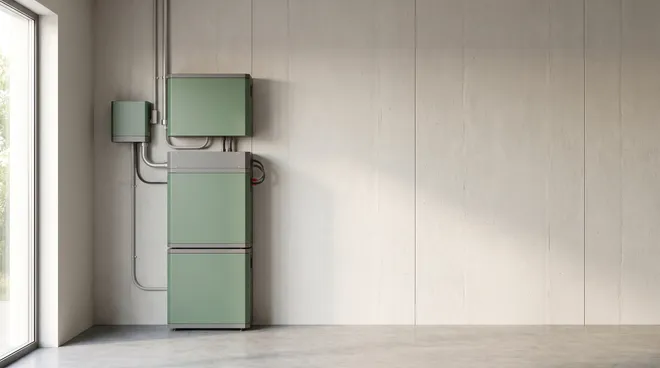

A modular 10 kWh system, expandable and monitored
A household of four with 8 kWp of panels and 60% export. We installed a modular 10 kWh system (2×5 kWh) with a hybrid inverter and a monitoring app. Self-consumption rose from 40% to 78%. The customer plans to add a third module with their future EV.
- 78%self-consumption
- 2×5 kWhmodular & scalable
- Monitoringin real time
Small, medium or large battery?
The right capacity depends on your consumption and your solar installation.
| Critère | 5 kWhVoir la gamme → | 10 kWhVous êtes ici | 15 kWh+Voir la gamme → |
|---|---|---|---|
| Evening coverage | Partial | Full (standard household) | Full + EV |
| Investment | The gentlest | Mid-range | Higher |
| Self-consumption | 55–65% | 70–80% | 80–90% |
| Scalability | Expandable | Expandable | Max capacity |
| Backup possible | Short | Several hours | Long-lasting |
| Installed power | 3–5 kWp | 5–8 kWp | 8–12 kWp+ |
| Ideal for | Small household, getting started | Standard family | Large family, EV, heat pump |
- why store
Solar battery
The complete page on storage: why, how and how much.
All about storage → - the chemistry
LiFePO4
The chemistry behind the battery: safety, cycles, depth of discharge.
All about LiFePO4 → - the controller
Hybrid inverter
The hybrid inverter manages the battery. Essential for storage.
See the inverters → - backup
Backup storage
A battery with EPS keeps your essential circuits running during outages.
See backup → - to combine
Solar kit
Panels + battery: the combo to maximise self-consumption.
See the kits → - ↑ category
All things solar
An overview of our solar panels across Belgium.
Back to the solar guide →
How much does a home battery cost?
The price depends on capacity, brand and whether a hybrid inverter is included.
See storage prices & returns →* Indicative ranges for installed equipment. Returns depend on your consumption profile.
- 5 kWh system from €4,000battery + inverter, installed
- 10 kWh system €6,500–9,000battery + hybrid inverter
- 15 kWh system €9,000–12,000large modular capacity
- Reduced VAT 6%for renovation (home > 10 years old)
Your questions about the home battery
Which battery brand should you choose? +
BYD (HVS/HVM) is the leader in residential storage in Europe: modular, LiFePO4, compatible with most inverters. Huawei LUNA2000 offers native integration with Huawei inverters. SolarEdge Home Battery fits into the SolarEdge ecosystem. We choose based on your configuration.
Where should the battery be installed? +
On a load-bearing wall, in a ventilated and frost-free space: garage, utility room, cellar. Close to the electrical panel and the inverter. The dimensions are compact (around 60×70×20 cm for 10 kWh).
Can you start small and expand? +
Yes, that’s the principle of modular systems. BYD and Huawei let you add modules in increments of 2.5 to 5 kWh. We provide the wiring for expansion from the initial installation.
Does the battery make noise? +
The storage modules are silent (no moving parts). The hybrid inverter gives off a faint hum during the day (the fan). No disturbance at night.
What’s the difference between a solar battery and a home battery? +
They’re the same thing seen from two angles: “solar battery” emphasises the panel/storage pairing, while “home battery” refers to the complete system installed in your home. The hardware and the way it works are identical.
What subsidies are available for a home battery? +
Subsidies vary by region and change over time. In 2026, the 6% VAT rate applies for renovation (home > 10 years old). Some regional subsidies exist depending on Wallonia or Brussels. We check your eligibility before the quote.
Get your free home battery quote within 48 hours
Free consumption study, precise sizing, verified subsidies. Describe your project in under a minute.
- Free and with no obligation
- Sized on your real consumption
- Installed by our certified fitters