


Sizing your solar battery: the right capacity, neither too much nor too little
A well-sized battery pays for itself; an oversized one sits half empty. The calculation doesn’t start from the panel output, but from your evening and night-time consumption, the surplus you inject and your self-consumption target. Here’s the method, backed by Belgian figures.
- 5–10 kWh
- the most common range
- ~1 kWh / MWh
- quick starting rule
- 80–90% DoD
- genuinely usable capacity
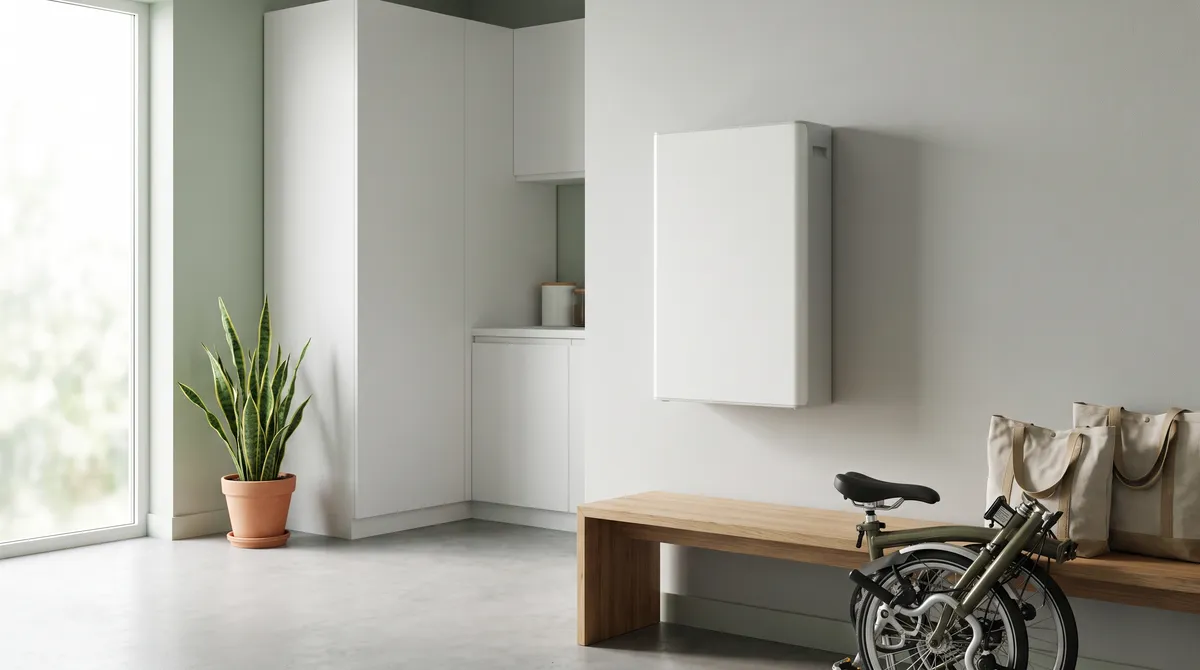
What determines your battery’s size
Sizing means feeding six parameters into an equation. None is a detail: it’s their combination that gives the right capacity, not a standard figure sold to everyone.
- Annual consumption 3–6 MWh per year
The starting point. An average Belgian household uses 3,000 to 3,500 kWh, more with a heat pump or an electric car. The rule of thumb: aim for about 1 to 1.5 kWh of capacity per MWh consumed each year, then refine.
- Day / night profile The most important
Two households with identical consumption don’t need the same battery. What matters is the share consumed in the evening and at night, when the panels no longer produce. The battery must cover that night-time consumption, not the daytime.
- PV surplus injected To store
The surplus you send back to the grid today is exactly what a battery can capture. If you inject little, a large battery will never fill up. We read this surplus on the Digimeter or the production profile.
- PV output installed kWp
A 4 to 6 kWp installation produces a large summer surplus: it easily feeds a medium-sized battery. Under-equipped with panels, the battery stays empty; both ends of the chain must be balanced.
- Power vs capacity kW ≠ kWh
Capacity (kWh) says how much energy is stored; charge/discharge power (kW) says how fast. A 10 kWh but 3 kW battery won’t keep up with an induction hob and a heat pump at the same time. Both are sized.
- Self-consumption target 60–80%
Aiming for 100% independence is expensive for the last few percent: marginal returns collapse. Most households optimise around 60 to 80% self-consumption, the best-amortised tier in Belgium.
* Indicative ranges for a Belgian residential home. The exact capacity is calculated from your actual readings (Digimeter, hourly consumption profile) — costed at the free study.
Sizing right: what it changes
Accurate sizing makes all the difference between a profitable battery and a poorly placed investment. Here’s what you gain by doing it seriously, and the pitfalls to know.
What a good calculation brings you
- Capacity genuinely usedA battery that charges and empties every day pays off its cost, instead of sitting half full.
- Self-consumption maximisedYou consume your own energy in the evening instead of buying it back from the grid, taxes included.
- Prosumer tariff better absorbedLess injection to the grid means less exposure to the variable part of the Walloon prosumer tariff.
- Scalability anticipatedWe plan for the future heat pump or electric car, without oversizing from the outset.
The mistakes that cost dearly
- Oversizing = extra costA battery that’s too big never fills completely: you pay for kWh of capacity that are never used.
- Confusing kW and kWhLarge capacity with low power throttles big appliances; the reverse empties the battery in a flash.
- Forgetting depth of dischargeNominal capacity isn’t usable capacity: 10 kWh at 90% DoD is 9 kWh you can actually use.
- Sizing on the panelsStarting from the kWp rather than the consumption profile almost always leads to a poorly calibrated battery.
What size for which household?
The right sizing depends on your way of life and your equipment. Three common scenarios in Belgium to gauge your need:
-

Household away during the day
No one home from 9am to 6pm: consumption is concentrated in the evening and at night. It’s the ideal profile for a battery, which stores the day’s surplus to release it after work. Often 5 to 8 kWh usable.
-
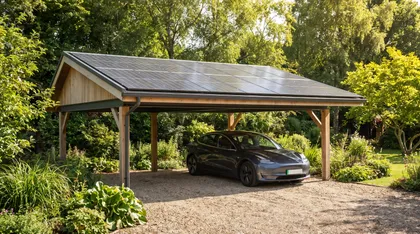
Heavily electrified home
Heat pump, electric car, induction: consumption climbs and changes shape. We aim for greater capacity and above all enough discharge power for simultaneous peaks. 8 to 12 kWh, sometimes more.
-
Backup need
If the objective includes a backup supply during an outage, the sizing changes: you need to cover the essential circuits for several hours, with a backup-compatible hybrid inverter.
For the simple self-consumption gain, a standard battery is enough. If you also want to keep going during an outage, look at storage with backup and a compatible hybrid inverter.
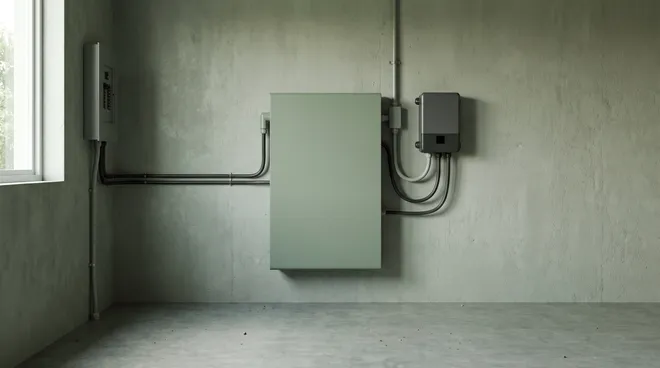

An 8 kWh battery calculated on the evening profile, not on the panels
The client was considering a 13 kWh battery "to be safe". Analysis of their Digimeter showed an evening and night-time consumption of about 7 kWh, and a modest summer PV surplus. We sized an 8 kWh usable battery: it empties and recharges every day, where the 13 kWh model would have stayed half full for half the year.
- 8 kWhinstead of the 13 kWh planned
- ~72%self-consumption rate
- −40%of extra cost avoided
Sizing, range or whole-home storage?
This page gives you the calculation method for a solar battery. To choose a model or think about wider (multi-energy) storage, follow the dedicated pages.
| Critère | Battery sizingVous êtes ici | Solar battery (range)Voir la gamme → | Storage sizingVoir la gamme → |
|---|---|---|---|
| Purpose of the page | The kWh calculation method | The available models | Storage in the broad sense |
| Starting point | Your consumption profile | The product specs | All energy vectors |
| Level of detail | Step-by-step calculation | Specs & prices | Overview |
| kW vs kWh explained | Yes, in detail | Touched on | Yes, overall |
| Depth of discharge | Detailed (usable DoD) | Mentioned | Covered |
| Belgian prosumer tariff | Built into the calculation | Touched on | Touched on |
| Read it if you want to | Calculate your size | Choose a model | Think whole-home storage |
- the range
Solar battery
An overview of solar batteries: technologies, capacities, brands and installed prices in Belgium. To move from calculation to choosing a model.
See the battery range → - to see
Home battery
Everyday residential storage: uses, integration into the panel board and the meter, and concrete benefits for a household.
Discover residential storage → - technology
Lithium battery
Why lithium dominates solar storage: density, cycle life and high depth of discharge.
Understand lithium → - to combine
Hybrid inverter
The brain of the installation: it manages panels, battery and grid, and governs the charge power and the backup.
See the hybrid inverter → - to combine
Storage with backup
If keeping going during an outage is part of the goal, the sizing changes: essential circuits and autonomy in hours.
See backup → - ↑ category
Solar panels
An overview of solar in Belgium: production, self-consumption, grants and connection. The starting point of any project.
Back to the solar guide →
How much does the capacity you calculate cost?
A battery’s cost is reasoned in €/kWh of capacity, hybrid inverter and installation included. The higher the capacity, the lower the price per kWh — hence the value of getting it right, neither too much nor too little.
See the detailed battery prices →* Indicative ranges for an installed residential lithium battery in Belgium, hybrid inverter included depending on configuration. Exact costing at your free study.
- Cost per kWh €600–900per kWh of capacity, installed
- 5 kWh battery from €4,500moderate consumption profile
- 10 kWh battery from €7,500electrified home, installed
- Reduced VAT 6%home over 10 years old
Your questions about capacity calculation
How do I quickly estimate the capacity I need? +
A useful starting rule: count about 1 to 1.5 kWh of battery capacity per MWh consumed each year. A household at 4,000 kWh/year thus lands around 4 to 6 kWh. But that’s only a starting point: the fine estimate is made from your evening and night-time consumption profile, and the PV surplus you actually inject.
Should I size the battery according to the panel output? +
No, that’s the most common mistake. The panel size (kWp) determines how much surplus you can store, but the battery capacity must first cover your consumption when the sun no longer produces, in the evening and at night. We always start from the consumption profile, then check that the PV surplus is enough to fill the battery.
What’s the difference between kW and kWh for a battery? +
kWh measure capacity, that is the amount of energy stored; kW measure power, the speed at which the battery can charge or discharge. A 10 kWh battery limited to 3 kW won’t be able to power an induction hob and a heat pump simultaneously. We size both: capacity for autonomy, power for peaks.
What is depth of discharge (DoD) and why does it matter? +
Depth of discharge indicates how much of the nominal capacity is actually usable without damaging the battery. A lithium battery often runs around 80 to 90% DoD: a nominal capacity of 10 kWh therefore gives 8 to 9 kWh usable. You must always reason in usable capacity, not displayed capacity, so as not to overestimate what the battery covers.
Does the prosumer tariff change the sizing? +
Yes, in Wallonia the prosumer tariff penalises energy injected then bought back from the grid. A well-sized battery reduces this injection by consuming the surplus on the spot, which improves returns. But oversizing is pointless if the surplus isn’t enough to fill it: the right calculation balances capacity, actual surplus and self-consumption target.
Why not just take the largest battery possible? +
Because an oversized battery never fills completely: you pay for kWh of capacity that lie dormant, and the marginal returns of the last few percent of autonomy collapse. Most Belgian households optimise around 60 to 80% self-consumption. Beyond that, the cost climbs much faster than the gain. Getting it right pays off more than thinking big.
Get your free battery sizing within 48h
We analyse your consumption profile and your PV surplus to calculate the right capacity. Free study, a single point of contact.
- Calculation based on your actual readings
- Capacity and power optimised
- Free study, no obligation