

Wall insulation: 25% of your heat loss escapes through the walls
After the roof, the walls are the second source of heat loss. In Belgium, many houses have cavity walls that are easy to inject. Otherwise, we insulate from the inside or from the outside (EWI). Each method has its strengths depending on your building.
- 25%
- of loss through the walls
- Injection
- the most common in BE
- Umax 0.24
- grant standard
Three ways to insulate your walls
The choice depends on the structure of your walls and your budget.
- Cavity injection The most common in BE
Many Belgian houses have a cavity wall (two leaves with a gap). We inject PUR foam, EPS beads or wool into the cavity through small holes in the facade, which are sealed afterwards.
- From the inside Lining
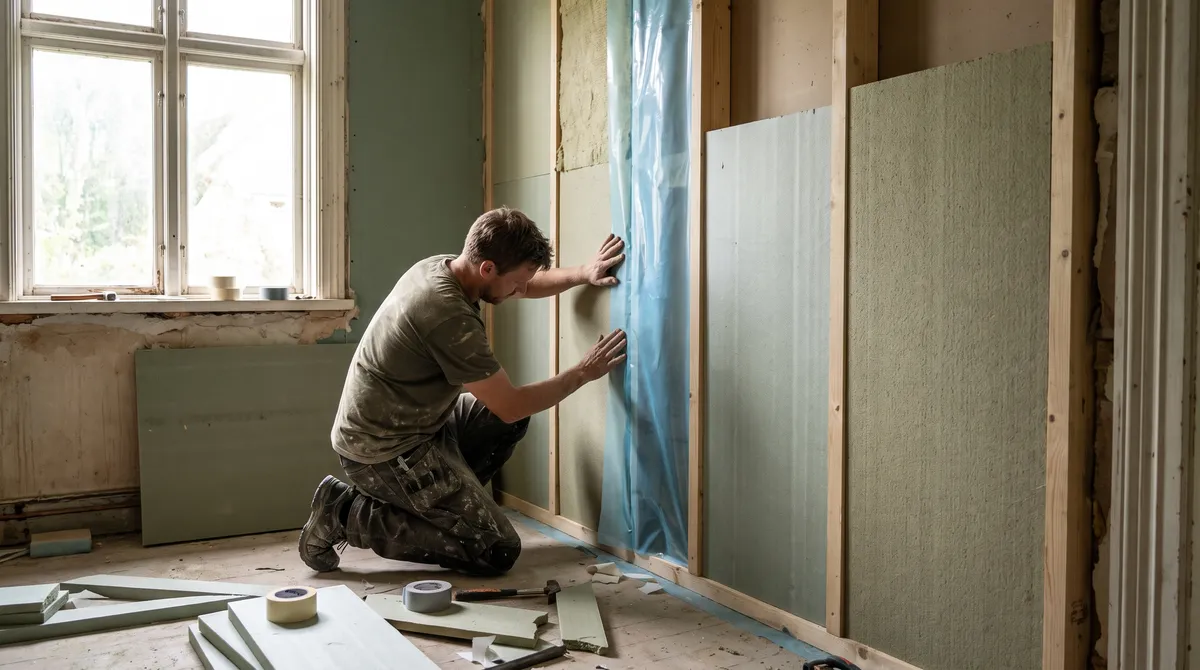
Insulating panels (PUR, wool) glued or screwed to the interior wall, covered with a finish (plasterboard). Suitable when the facade cannot be touched.
- From the outside (EWI) Maximum performance
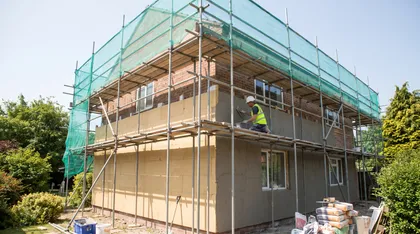
Insulating panels fixed to the facade and covered with render or cladding. Eliminates thermal bridges, changes the exterior appearance. A permit is often required.
- Target U-value Umax 0.24 W/m²K
The threshold for regional grants. Cavity injection alone does not always reach it (cavity too narrow); EWI reaches it easily.
- Typical cavity 4–8 cm
The cavity width determines the thickness of insulation that can be injected. With 6 cm of PUR foam (λ 0.028), you reach U ≈ 0.4 — a huge gain but sometimes not enough for the maximum grants.
- Visual impact None (injection)
Injection changes nothing about the facade’s appearance. EWI alters the look (new render or cladding). Interior lining slightly reduces room size.
* Indicative values. The method and thickness depend on the structure of your walls — diagnosis during the on-site survey.
Injection, interior or exterior?
Each method has its strengths and limits. Here is how to choose.
Cavity injection
- Fast and minimally invasiveA few hours, no heavy scaffolding. Holes sealed, facade intact.
- The gentlest budgetThe lowest cost per m² of all wall insulation methods.
- No loss of interior spaceThe insulation sits in the existing gap, without reducing room size.
- No change to the facadeNo permit, no change to the exterior appearance.
EWI (from the outside)
- Eliminates thermal bridgesThe continuous envelope from the outside removes the bridges that injection cannot address.
- Maximum performanceNo thickness limit: you easily reach Umax 0.24 and better.
- A refreshed facadeNew render or cladding gives the house a modern look.
- No interior lossLike injection, EWI does not reduce interior space.
Which method for your walls?
The choice depends on the wall structure and the budget.
-
Cavity wall
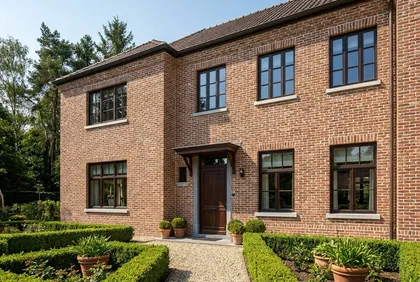
Very common in Belgium. Injection into the cavity is the fastest and most economical method. A few hours, no visible change.
-
Solid wall or facade to refresh
Solid walls with no cavity, or a facade to renovate: EWI is the complete solution (insulation + new finish).
-

Untouchable facade
Listed building, co-ownership or recent facade: interior lining insulates without altering the exterior.
If the roof is not yet insulated, start there: it is the leading source of heat loss. See roof insulation. And for an overview of materials, check out our insulation materials guide.
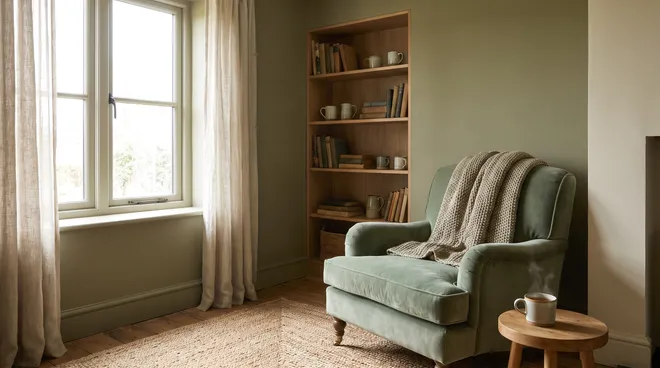
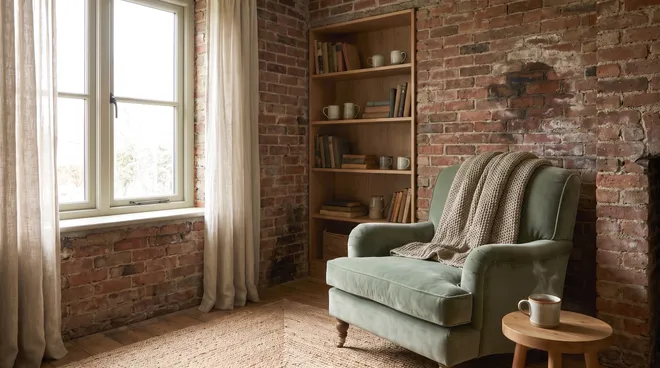
Cavity injection in half a day, immediate gain
A 1980s house with a 6 cm empty cavity. PUR foam injected in 4 hours, 12 holes sealed and invisible. Before/after thermography: the walls went from red to green. Heating bill cut by 20% from the very first winter.
- −20%on heating
- 4 hoursof work
- Facadeintact
Injection, lining or EWI?
Three methods depending on the structure of your walls and your budget.
| Critère | Cavity injectionVous êtes ici | Interior liningVoir la gamme → | EWI (exterior)Voir la gamme → |
|---|---|---|---|
| Price | The gentlest | Mid-range | The highest |
| Duration of work | A few hours | A few days | 1–3 weeks |
| Performance | Good (limited by the cavity) | Very good | The best |
| Loss of space | None | 5–10 cm/wall | None |
| Thermal bridges | Reduced | Condensation risk | Eliminated |
| Permit | No | No | Often yes |
| Ideal for | Cavity wall, budget, speed | Untouchable facade | Solid wall, facade renovation |
- from the outside
EWI / facade
Exterior insulation for solid walls or when you want maximum performance.
See EWI → - priority no.1
Roof insulation
If the roof is not insulated, start there — 30% of heat loss.
See the roof → - complement
Floor insulation
The floor accounts for 10% of heat loss. Often done from the cellar.
See the floor → - which material
Materials
PUR, wool, cellulose, EPS: compare the insulation materials.
Compare materials → - pair it with
PVC windows
Insulating the walls without changing the windows leaves a weak point. We treat both together.
See the windows → - ↑ category
All insulation
An overview of our insulation solutions in Belgium.
Back to the insulation guide →
How much does wall insulation cost?
The price depends on the method, the material and the surface area. Here are benchmarks per m² installed.
See detailed insulation prices →* Indicative ranges per m² installed. The exact price depends on the wall structure and accessibility.
- Cavity injection 15–30 €/m²PUR foam or EPS beads
- Interior lining 40–75 €/m²PUR + finish
- EWI (exterior) 100–200 €/m²insulation + render or cladding
- Renovation grant up to 35%depending on income and region
Your questions about wall insulation
How do I know if I have a cavity wall? +
In Belgium, most houses built between 1945 and 1985 have cavity walls (two leaves with a 4 to 8 cm gap). We check during the survey with a probe or an endoscopic camera inspection.
Does injection damage the facade? +
No. We drill small holes (ø 12–16 mm) in the joints, inject the insulation and seal them. Once dry, the holes are almost invisible.
Does injection cause damp? +
No, provided the facade is sound and the cavity is clean. PUR foam is watertight. We check the condition of the wall before injecting.
Do I need a permit for EWI? +
Often yes, because EWI alters the appearance of the facade (new render or cladding). In Wallonia, a prior declaration or a permit may be required. We handle the paperwork for you.
Does interior lining take up much room? +
The added thickness is 5 to 10 cm per wall (insulation + finish). In small rooms, it is noticeable. We only line the exterior walls, not the interior partitions.
Which grants apply to wall insulation? +
Regional grants generally require Umax ≤ 0.24 W/m²K. Cavity injection does not always reach this threshold (cavity too narrow). EWI reaches it systematically. VAT at 6% for renovation.
Get your free wall insulation quote within 48h
Free wall diagnosis, choice of method, grants calculated. Describe your project in under a minute.
- Free and no obligation
- Cavity/solid wall diagnosis included
- Installed by our certified teams