

Changing your windows is a decision you only make once a generation. So the question inevitably comes up: how long will my investment last? The good news is that a window installed by the book ages slowly. The nuance is that not all materials last the same number of years — and the way you care for them weighs as much as the material itself. This guide takes a full tour of the question, without empty promises.
What lifespan by material?
There is no “eternal” window, but realistic ranges, validated by decades of field feedback. These durations assume a correct installation and a minimum of maintenance: they are orders of magnitude, not expiry dates.
Very stable profile and almost no maintenance. Hardware and seals wear out before the frame.
Aluminium ≈ 30–45 yearsThe most durable: immune to warping and corrosion, even in a dark colour.
Wood & wood-alu ≈ 20–40 years / 35+Wood depends on maintenance; wood-alu, protected outside, easily exceeds 35 years.
PVC: very stable, but not immortal
The PVC profile does not rust, does not rot and asks for almost nothing: it easily reaches 25 to 35 years. What ages first is not the frame, but the moving parts — seals that harden, mechanisms that fatigue. These are replaceable elements, which means that a “tired” PVC window is often a window to maintain, not to throw away.
Aluminium: the marathon runner
Aluminium is the most durable material: immune to corrosion, it does not warp, even in a dark colour exposed full south. Count on 30 to 45 years, or even more. Its Achilles’ heel is not the metal but the thermal performance of old models without a thermal break — a matter of insulation, not strength.
Wood: it all depends on maintenance
Wood is the material whose longevity varies the most: from 20 to 40 years. A maintained wood window — finish renewed every five to ten years — ages beautifully. Neglected, exposed to driving rain, it can deteriorate in fifteen years. It is the only material whose lifespan is, literally, in your hands.
Wood-alu: the best of both
Wood-alu solves the only weakness of wood: its aluminium cover takes the rain and UV on the outside, while the wood stays protected inside. The result is a lifespan that exceeds 35 years without the maintenance chore of an all-wood window.
What really makes the difference
At equal material, two identical windows can last ten years apart. Four factors explain almost all of that gap.
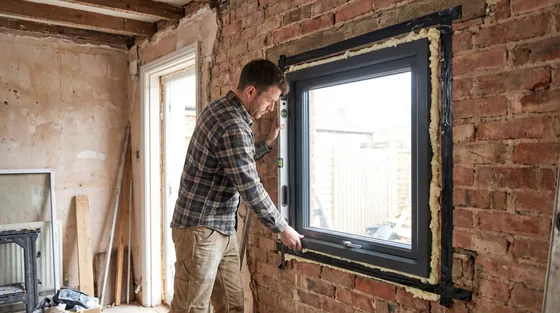
- The quality of the installation. This is the number-one factor. Botched airtightness lets water and air infiltrate, and no profile, however good, survives a poor installation for long.
- The exposure. Full south, by the sea or facing the prevailing winds, a window takes far more UV, rain and temperature swings. Dark colours work harder there.
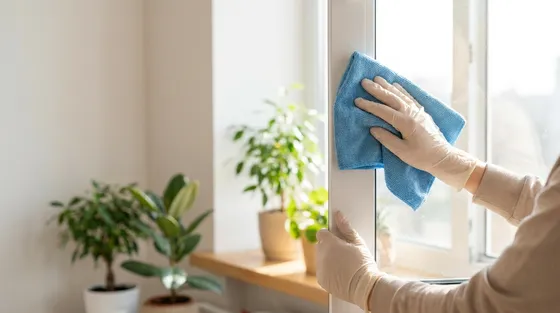
- The maintenance. A few annual actions — cleaning, lubrication, checking the seals — push back wear by several years. Neglecting it shortens the window’s life.
- The glazing. Modern double or triple glazing is sealed: its own lifespan (before any internal fogging) is around 20 to 25 years, independently of the frame.
“A window almost never dies of old age: it dies of a failed installation, a seal that was never replaced or an infiltration that was allowed to spread.
The signs that a window is reaching end of life
No need to replace at the first creak. On the other hand, certain symptoms, especially when they add up, indicate that you are nearing the end of the road.
- Condensation appears between the two panes: the double glazing’s seal has given way, the insulating gas has escaped.
- Draughts persist despite recent seals, or the window closes poorly.
- The wood is softened, swollen or stained at the bottom corners — a sign of infiltration and rot.
- The profile is warped, distorted or cracked, and the window no longer seals correctly.
- Your windows are still single glazed: there, it is less a question of wear than of outdated performance.
A single one of these signs does not necessarily condemn the window. Several together, on the other hand, tip the balance towards replacement.
Guarantees: who covers what, and for how long
A window is not covered “as a block”: each component has its own guarantee, and it is useful to know which one applies in case of trouble.
- The profile (the frame itself) often benefits from a guarantee of 10 years or more against manufacturing defects, warping or abnormal discolouration.
- The glazing is guaranteed specifically against internal condensation — proof that the manufacturer stands behind the lifespan of the seal.
- The hardware (handles, hinges, tilt-and-turn mechanisms) has its own guarantee, distinct from the frame.
- The installation falls under the installer’s guarantee: it is the one that covers an infiltration due to a workmanship defect.
The right reflex: keep the quote, the invoice and the certificates. Without these documents, claiming a guarantee becomes complicated. For the details of your project, our window solutions specify the guarantees component by component.
Repair or replace: how to decide
The question arises as soon as a fault appears, and the answer is almost always economic before being technical. As long as the problem is localised — a hardened seal, a broken handle, a seized mechanism, or even an isolated fogged pane — the repair is quick, inexpensive and gives the window years back.
A seal, a mechanism or a fogged pane can be replaced without changing the whole window — often for a fraction of the price of a new window. You always start there.
See window repair →You switch to replacement when faults multiply, when the profile itself is affected (rotten wood, corroded alu, warped PVC), or when the performance gap with a modern window becomes the real issue: original single glazing, for example, cannot be “repaired”. For how a window replacement project unfolds and the budget to plan for, our dedicated guide details each step.
This is the average lifespan of a quality window, all materials combined. But with good maintenance and a careful installation, many windows go well beyond this benchmark.
How to extend the lifespan of your windows
Longevity is not just a matter of material: it is cultivated. A few simple habits, spread over the year, are enough to gain years.
- Clean the profiles with soapy water once or twice a year, and clear the water-drainage grooves at the bottom of the frame to avoid stagnation.
- Lubricate the hardware (hinges, mechanisms) once a year with a suitable product: it is the action that prevents the most breakdowns.
- Watch the seals: as soon as they harden or crack, replace them. A seal costs a few euros and preserves the airtightness of the whole window.
- For wood, renew the stain or paint at the recommended pace: that is what separates a 20-year window from a 40-year one.
On PVC, these actions amount to almost nothing — hence its reputation as a “trouble-free” material. Our PVC window maintenance guide gives the detail season by season.
The 30-second recap
- PVC ≈ 25–35 years, alu ≈ 30–45 years, wood ≈ 20–40 years depending on maintenance, wood-alu 35+.
- The quality of installation is the first factor of longevity, ahead of the material itself.
- Condensation between panes, draughts, rotten wood or a warped profile = signs of end of life.
- Each component has its guarantee: profile, glazing, hardware and installation — keep your documents.
- As long as the fault is localised, you repair; you replace when they add up.
Guide verified in May 2026 · updated every year