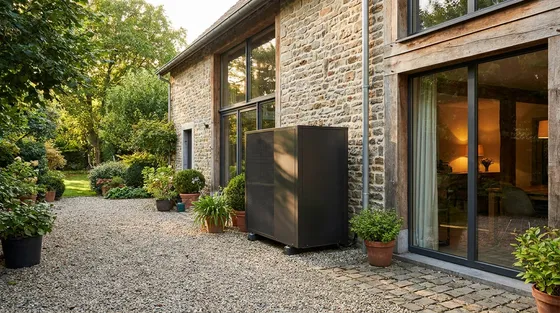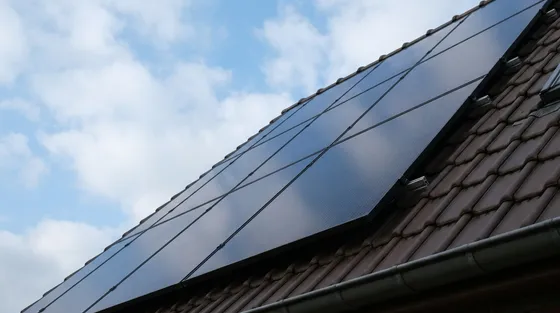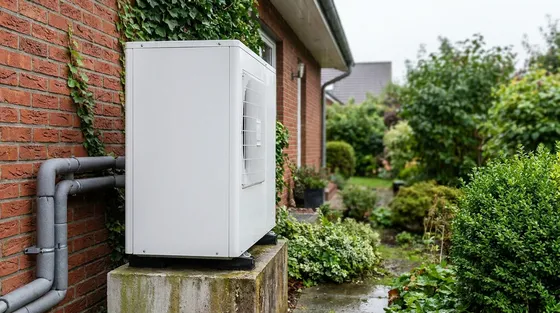


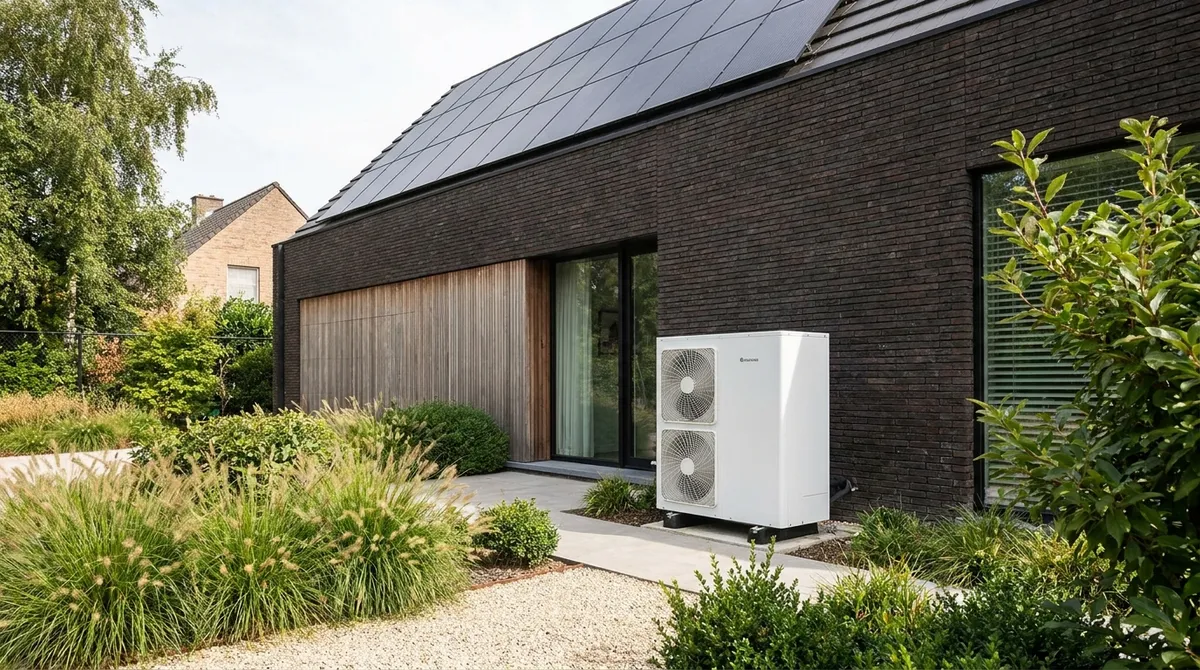
Taken separately, the heat pump and solar panels are already two of the best energy investments you can make. But it is together that they reveal their full potential: one consumes electricity to heat, the other produces it for free on your roof. Properly sized, this duo turns part of your heating into near-free energy — and that is precisely what makes it one of the most profitable set-ups on the market.
Why these two systems complement each other so well
A heat pump burns nothing: it draws free heat from the air or the ground and releases it into your home, consuming only the electricity its compressor needs. For one kilowatt-hour of electricity consumed, it delivers three to four kilowatt-hours of heat. That is already remarkable — but that electricity has to be bought somewhere.
That is where solar panels come in. While the heat pump runs, the roof produces. The logic of pairing them is simple: have the heat pump consume, as much as possible, the electricity your panels produce at the same moment, rather than the paid electricity from the grid. Every solar kilowatt-hour directed to the heat pump is a kilowatt-hour of heating that costs you nothing.
Self-consumption, the real engine of the savings
The value of a solar panel is measured by its ability to avoid a purchase from the grid. Yet, in a typical house, a large share of the day’s solar production goes to the grid for lack of consumption at the right moment. The heat pump changes the game: it is a big electricity consumer, active precisely when the sun is shining. It “absorbs” the solar production instead of letting it flow back out, which pushes up your self-consumption rate — the only figure that really matters for profitability.
This is the heat delivered by a heat pump for 1 kWh of electricity consumed. When that electricity comes from your panels, the cost of your heating tends towards zero.
Near-free heating in the shoulder seasons
It is in spring and autumn that the duo is at its best. The days are already sunny, solar production is climbing back up, but the evenings stay cool and the heating still runs a little. The result: the heat pump runs largely on the roof’s electricity, and your heating bill grazes zero for several months.
In the depths of winter, the equation reverses: it is the time when you heat the most while solar produces the least. The grid then takes over. So the duo does not eliminate every electricity purchase over the year, but it sharply caps the bill and smooths your energy spending. Over twelve months, the cumulative saving is very significant.
Sizing the two together properly
The classic trap is to size the panels for household consumption alone — appliances, lighting, hot water — without accounting for the electrical appetite of the future heat pump. The pairing then loses part of its value.
How many panels to feed a heat pump?
It all depends on the home’s insulation, the heated area and the type of heat pump, but a reliable order of magnitude can be kept in mind: a heat pump adds, on average, 1,500 to 2,500 kWh of electricity consumption per year for the heating and hot water of a properly insulated house. To cover this surplus, you should roughly plan for 1.5 to 2.5 kWp of extra panels — that is four to six more panels than for household uses alone, depending on the orientation and tilt of your roof.
The ideal is therefore to study both systems as a single whole. That is the whole point of calling on a provider able to quote for everything: the panel sizing factors in the heat pump’s projected consumption from the start, and the solar panel installation is designed for this consumption profile.
Heat pump, solar panels or both: our simulator estimates the annual saving, the net cost after grants and the payback time for your house.
Launch the payback simulator →Smart control makes the difference
Having a heat pump and panels is not enough: you still need to make them work in sync. That is the role of smart control, which synchronises heating needs with solar production.
Heat and make hot water when the sun is out
In practice, a controlled system will favour the high-production hours for the most energy-hungry uses: nudging the set-point temperature up at midday, triggering domestic hot water production when the roof produces its maximum, or pre-loading the building’s inertia before evening falls. The house then stores the solar heat as thermal energy, in its hot water tank and in its mass, to release it later. It is free, and it boosts self-consumption further with no effort on your part.
The battery, as a complement
A home battery pushes the logic further: it stores the midday solar surplus to release it in the evening, when the heat pump picks up again and the roof no longer produces. It is not essential — a good share of the heat pump’s consumption already happens during the day — but it complements the duo well if you are aiming for true energy independence. The right trade-off depends on your consumption profile and your budget.
A combined profitability, greater than the sum of the two
Taken on their own, each system has its own payback time. Paired, they improve each other: the heat pump raises the panels’ self-consumption (hence their profitability), and the panels reduce the heat pump’s running cost (hence its profitability). The return on investment of the full set-up is therefore better than that of each device considered alone.
To this are added the grants, which are separate for the heat pump and for photovoltaics, and generally combinable. The amounts and conditions change every year and differ by Region: they can take back a sizeable share of the investment. It is a parameter to factor into the calculation from the start, because it noticeably changes the payback time.
Should you really install both at the same time?
Not necessarily, but doing it together has real advantages: a single, coherent study, control set up from commissioning, pooled visits and a single point of contact for everything. If you install the systems at different times, the golden rule is to plan for the solar production surplus from the moment you size the panels, so you do not have to extend your installation later.
To gauge what this duo means concretely in your home — savings, net cost after grants and payback time — the simplest approach is to start from your real situation. Our guide on heat pump payback details the method, and the payback simulator quantifies your case in a few minutes.
The recap in 30 seconds
- The heat pump consumes electricity, the panels produce it: together, they maximise self-consumption.
- Allow for 1.5 to 2.5 kWp of extra panels to cover the 1,500 to 2,500 kWh/year of a heat pump.
- In the shoulder seasons, heating grazes free; in winter, the grid takes over.
- Smart control heats and makes hot water when the sun is out; the battery completes the duo.
- Heat pump and solar grants are separate and combinable — to factor into the payback calculation.
Guide verified in May 2026 · updated every year