

Changing your window frames is an investment that stays with you for decades. Before even talking dimensions or colours, one question always comes up: PVC, aluminium or wood-alu? There is no bad material — only a material more or less suited to your façade, your priorities and your budget. This guide gives you the keys to decide with full knowledge of the facts.
The three materials at a glance
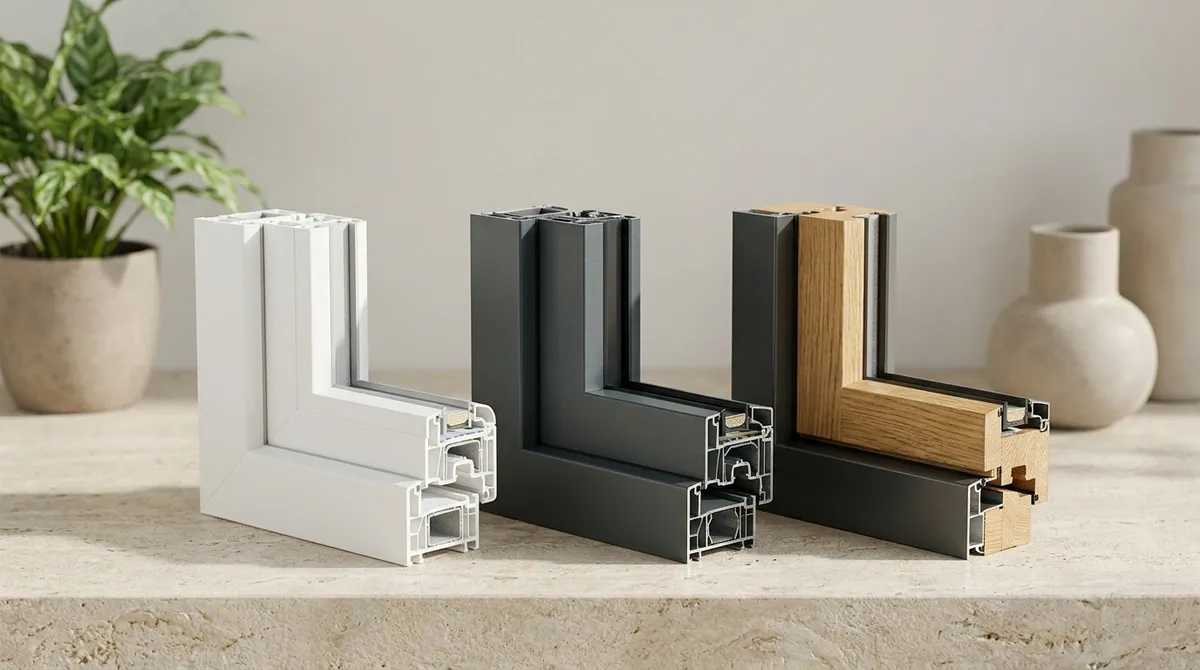
Three families cover almost all residential projects in Belgium. They all aim for the same thing — weather-tightness, security, insulation — but with different trade-offs on price, slimness and upkeep.
Very good insulation, contained price, almost no maintenance. The renovation standard.
Aluminium The slimmestNarrow profiles, large glazed surfaces, a contemporary line and great longevity.
Wood-alu The high endThe warmth of wood on the inside, maintenance-free aluminium on the outside.
PVC: the best value for money
PVC now equips the majority of Belgian homes, and that is no accident. The profile’s internal air chambers give it naturally high thermal insulation, it requires almost no maintenance, and it remains the most affordable material for equal performance.
Its strengths
- High thermal and acoustic insulation from the entry-level profile onwards
- Maintenance reduced to a wash with soapy water once or twice a year
- Wide choice of laminated colours, including strikingly convincing wood-imitation finishes
Its limits
PVC profiles are wider than aluminium: on a very large bay, they slightly reduce the clear glazing area. And while white stays flawless for decades, very dark colours facing full south require a reinforced profile to avoid warping.
Standard window, large bay or French window: find the 2026 ranges by profile range, grants included.
See PVC window frame prices →Aluminium: slimness and large bays
Aluminium plays the slimness card. Its mechanical strength allows very narrow profiles that maximise the glazed surface: it is the material of large bays, pocket sliding doors and contemporary extensions. Well installed, it easily lasts several decades without warping.
Its strengths
- Slim, elegant lines, ideal for large glazed surfaces
- Very high stability over time, including in dark colours
- Recyclable and particularly durable
Its limits
Aluminium naturally conducts heat: a high-performance frame therefore requires a quality thermal break, without which the insulation drops and condensation appears. This technology has a cost — it is the most expensive of the three materials at an equivalent range.
Sliding doors, bays, thermal-break profiles: the 2026 price benchmarks for aluminium, grants deducted.
See aluminium window frame prices →Wood-alu: the durable high end
Wood-alu combines the best of both worlds: a solid-wood core on the inside, for warmth, a noble look and remarkable natural insulation; an aluminium cap on the outside, which takes the rain and sun without the slightest maintenance. It is the premium solution par excellence.
“Wood-alu is the warmth of wood inside your home and the peace of mind of aluminium outside — without sanding every five years.
Its main drawback remains the price: it is the most expensive option, justified for an ambitious renovation, a characterful home or a low-energy goal. Inside, the wood needs light, infrequent upkeep; outside, the aluminium needs nothing.
How to decide based on your home
Rather than looking for “the best” material in the abstract, start from your situation. Four criteria are enough to make an obvious choice clear in most cases.
- Budget first. If the envelope is tight, PVC offers the best performance per euro invested — with no compromise on insulation.
- Large glazed bays? Aluminium and its slim profiles maximise the light and give a contemporary line.
- A characterful home or a premium project? Wood-alu brings the charm of wood without the maintenance burden.
- Looking for zero maintenance? PVC and wood-alu (on the outside) win; aluminium too, provided it has a good thermal break.
This is the average lifespan of a quality window frame, whatever the material. The right choice is therefore one you live with for a long time: all the more reason to make it knowingly.
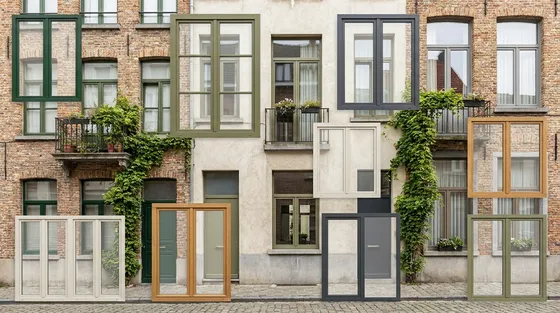
And nothing forces you to make everything uniform: it is common to fit aluminium on a large bay on the garden side and PVC on the bedroom windows, to balance style and budget.
And what about the glazing?
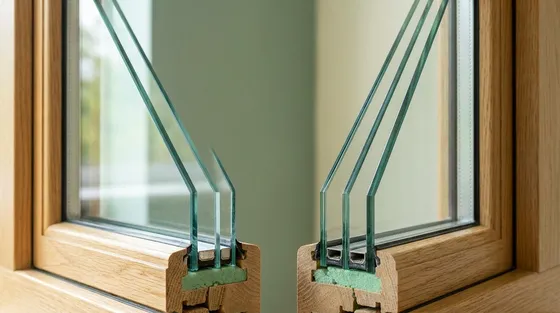
The frame material does half the job; the glazing does the other half. An excellent profile paired with mediocre glazing will never insulate properly. High-performance double glazing is now the standard; triple glazing is justified on a north-facing façade, near a noisy road or to aim for low energy use.
Understanding the Ug values, the comfort gained and the extra cost, to choose the right glazing with the right material.
Compare glazing types →How much to budget
For an equal surface, PVC remains the most accessible option, aluminium sits above because of the thermal break, and wood-alu brings up the rear at the high end. But the net amount depends above all on the regional grants, which can take on a significant share of the bill when the glazing is high-performance.
2026 ranges by material and size, the factors that make the bill vary, and grants in Wallonia, Brussels and Flanders — with a worked, costed quote example.
See the price & grants guide →The 30-second recap
- PVC — the best insulation/price ratio, for the majority of homes.
- Aluminium — slim profiles, ideal for large bays and a contemporary style.
- Wood-alu — the durable premium: warmth of wood inside, zero maintenance outside.
- The glazing counts as much as the profile — and opens the door to grants.
- When in doubt, a free on-site survey settles it in a few minutes.
Guide reviewed in May 2026 · updated every year