

Sizing your storage: the right size depends on your goal
Before talking kWh, ask the real question: store for what? Maximising self-consumption from your panels, keeping the lights on during an outage, or optimising a tariff? Each goal calls for a different calculation. We give you the method, goal by goal, so you neither under- nor oversize.
- 5–15 kWh
- typical residential capacity
- 3–5 kW
- usual output power
- 80–90%
- usable depth of discharge
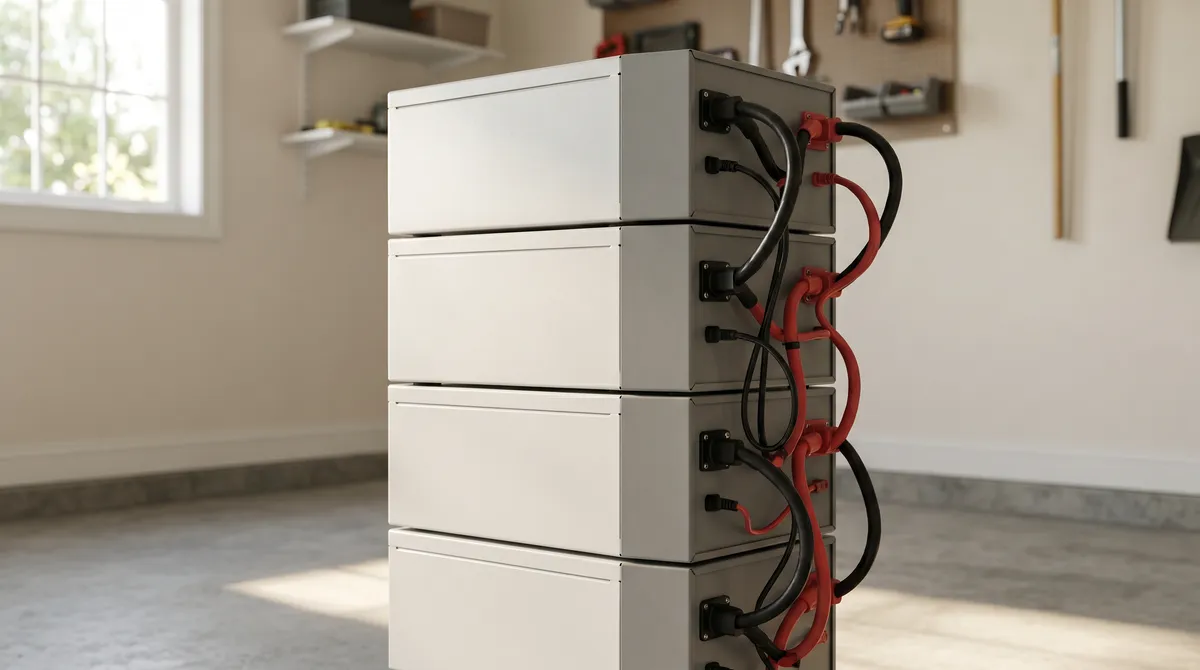
What you really size in a storage system
Storage isn’t just a number of kWh. Capacity, power, depth of discharge and margins are set together, based on usage. The benchmarks that count.
- Capacity 5–15 kWh usable
How much energy you can store, in kilowatt-hours. For self-consumption, we set it on evening and night usage; for backup, on the autonomy in hours you want for your essential circuits.
- Output power 3–5 kW continuous
The instantaneous output the battery can deliver. Independent of capacity: a large but low-power battery won’t run an induction hob. Worth checking above all for backup use.
- Start-up surge ×2–3
Some appliances (pump, fridge, motor) draw a start-up spike well above their rated power. The storage output must absorb that surge, not just the average.
- Depth of discharge 80–90%
The genuinely usable share of capacity. A 10 kWh battery at 90% DoD offers ~9 kWh usable. We always reason in usable kWh, never in the raw nameplate capacity.
- Round-trip efficiency ~90%
Storing then releasing costs a few percent of energy. To be factored into the self-consumption calculation: you recover slightly less than you put into the battery.
- Scalability Modular
Many systems expand by modules. Better to plan an extension reserve than to oversize from the start: your uses (electric car, heat pump) will evolve.
* Indicative benchmarks for residential storage. The exact capacity and power are calculated from your consumption profile and your goal — specified at the assessment.
Sizing it right: what it changes
A well-sized storage system pays off and delivers the expected service. Poorly sized, it sits half-empty or saturates every evening. Here are the benefits and the pitfalls.
What good sizing brings
- Capacity set on real usageNeither half-empty nor saturated every evening: every installed kWh works.
- Power matched to appliancesThe output absorbs start-up surges; nothing trips at the worst moment.
- Profitability preservedYou avoid paying for kWh that are never used, common with oversizing.
- Scalable without redoing everythingAn extension margin ready for an electric car or a heat pump.
Pitfalls to avoid
- Confusing kWh and kWPlenty of capacity doesn’t guarantee the power to run a hob or an oven.
- Oversizing "to be safe"A battery too large for a small PV surplus never fills up: capital that sits idle.
- Forgetting the start-up surgeAn output set on the average trips the system when a motor kicks in.
- Reasoning in raw capacityIgnoring depth of discharge and efficiency inflates the expected autonomy by 10 to 20%.
Three goals, three ways to size
The first step isn’t a calculation, it’s a choice. Identify your main goal: the sizing method follows directly.
-
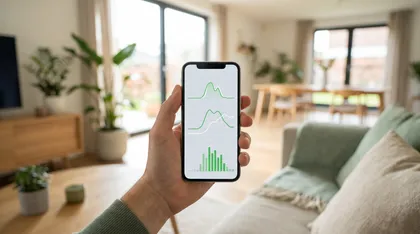
Maximise self-consumption
We size on evening and night usage, and on the PV surplus produced during the day. The battery soaks up the midday excess to release it after sunset — the heart of the value in Belgium with the prosumer tariff.
-
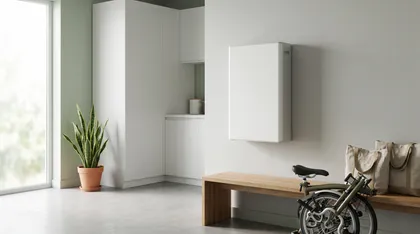
Ensure backup
We list the essential circuits (lighting, fridge, internet box, heating) in kW, and the desired autonomy in hours. kW × hours = kWh needed. We then check that the output power is enough to start the appliances.
-
Optimise a tariff
Store during off-peak hours to consume during peak hours. We size on the consumption gap between the two tariff windows, factoring in the round-trip efficiency that eats into the gain.
If your goal is pure solar self-consumption, follow the dedicated guide to sizing a solar battery. If the priority is riding out outages, start from backup storage.
Storage recalculated around two combined goals
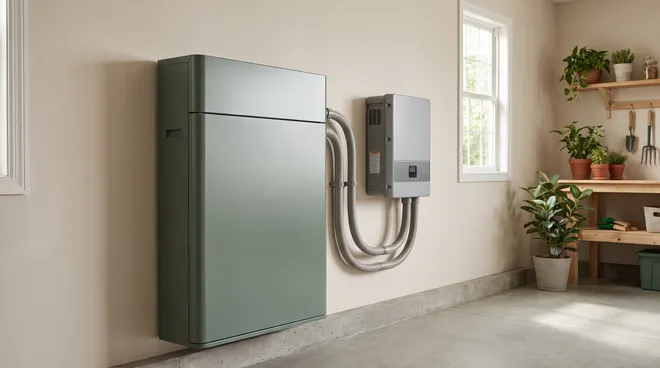
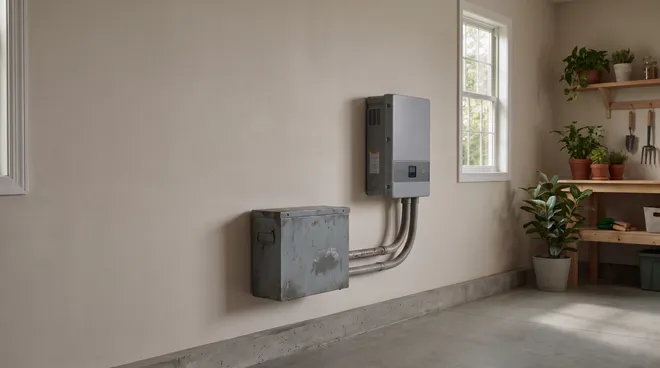
The family wanted both to absorb the surplus from their 6 kWp and keep the fridge, lighting and box running during outages. We combined the two needs: ~8 kWh for evening self-consumption, ~3 kWh of backup reserve. The result: an 11 kWh usable system, 5 kW output to handle start-ups.
- 11 kWhusable, two goals combined
- +72%self-consumption reached
- 8 hof autonomy on essentials
Storage sizing, battery or backup?
This guide reasons by goal and covers backup. The dedicated pages dig into pure solar self-consumption and backup. Compare the angles, then open the one that fits your project.
| Critère | Storage sizingVous êtes ici | Solar battery sizingVoir la gamme → | Backup storageVoir la gamme → |
|---|---|---|---|
| Starting point | Your goal | PV production | Outages to cover |
| Self-consumption | Covered | At the heart of the calc | Secondary |
| Backup | Covered | Out of scope | At the heart of the calc |
| kWh vs kW | Both detailed | Mostly kWh | Mostly output kW |
| Prosumer / off-peak tariff | Built in | Mentioned | Barely relevant |
| Depth of discharge | Explained | Explained | Critical |
| Ideal for | Choosing your goal first | Optimising existing PV | Riding out an outage |
- backup goal
Backup storage
Keep power on your essential circuits during an outage. The kW × hours method to calculate the autonomy needed.
See backup storage → - the product
Solar battery
The system that stores your PV surplus for the evening. Technologies, capacities and inverter compatibility.
Discover the solar battery → - PV self-use
Size the solar battery
The calculation focused on self-consumption: PV surplus, evening usage and prosumer tariff.
Calculate for solar → - to compare
Home battery
Residential storage in all its forms, with or without panels. Uses, installation and budget.
See the home battery → - to combine
Hybrid inverter
The brain that drives panels, battery and grid. Often essential for an effective backup mode.
Understand the hybrid → - ↑ category
Solar panels
An overview of solar in Belgium: production, self-consumption, storage and subsidies on one page.
Back to the solar guide →
How much does storage cost by size?
Price tracks mostly usable capacity and output power. Good sizing avoids paying for useless kWh. Here are benchmarks for installed storage, before subsidies.
See the detailed storage budget →* Indicative ranges for residential storage installed, excluding specific configuration. Precise quote during your free assessment.
- 5 kWh storage from €4,500installed, self-consumption use
- 10 kWh storage from €7,500installed, 5 kW output
- Backup mode option + €800automatic switchover on outage
- Reduced VAT 6%on renovation (home > 10 years)
Your questions about storage size
Where do I start to size a storage system? +
With the goal, not the kWh. Do you want to maximise self-consumption from your panels, keep power during an outage, or optimise an off-peak tariff? Each is calculated differently: evening consumption and PV surplus for self-consumption, essential circuits and autonomy in hours for backup.
What’s the difference between capacity (kWh) and power (kW)? +
Capacity, in kWh, says how much energy you can store. Power, in kW, says how fast the battery can release it. A large capacity doesn’t guarantee you can run an induction hob: that’s what output power enables. We set the two separately.
How do I calculate capacity for backup use? +
List the essential circuits you want to keep (lighting, fridge, box, backup heating) and estimate their power in kW. Multiply by the desired autonomy in hours: kW × hours = kWh needed. Then check the output power absorbs appliances’ start-up surge, which is higher than their rated value.
What size for self-consumption in Belgium? +
We set the battery on evening and night usage, and on the PV surplus produced during the day. No point aiming for storage larger than your panels can fill: it would sit half-empty. With the prosumer tariff, the whole point is to consume your surplus rather than inject it.
Why not oversize to be safe? +
A battery too large for your surplus or your consumption never fully fills or empties: you pay for kWh that don’t work. Better a well-sized, modular system you extend later if your uses grow (electric car, heat pump).
Should I account for depth of discharge? +
Yes, always. A battery rated at 10 kWh often delivers only 8 to 9 usable, because you don’t discharge it to 100% in order to preserve its lifespan. Add the round-trip efficiency of around 90%: we reason in genuinely available kWh, not the catalogue’s raw capacity.
Have your storage sized for free within 48h
We start from your goal, analyse your consumption and calculate the right capacity and power. Describe your project in under a minute.
- Goal-based assessment, no obligation
- Capacity AND power calculated on your profile
- Subsidies & 6% VAT explained for you