

LiFePO4 lithium battery: the safest chemistry for your home
Lithium iron phosphate (LiFePO4) has become the benchmark for residential storage. More thermally stable than NMC, it handles over 6,000 charge/discharge cycles, discharges to nearly 100% without wearing out and lasts more than ten years. The dependable heart of your home battery.
- 6,000+
- life cycles
- 95–100%
- depth of discharge
- 10–15 years
- warranty
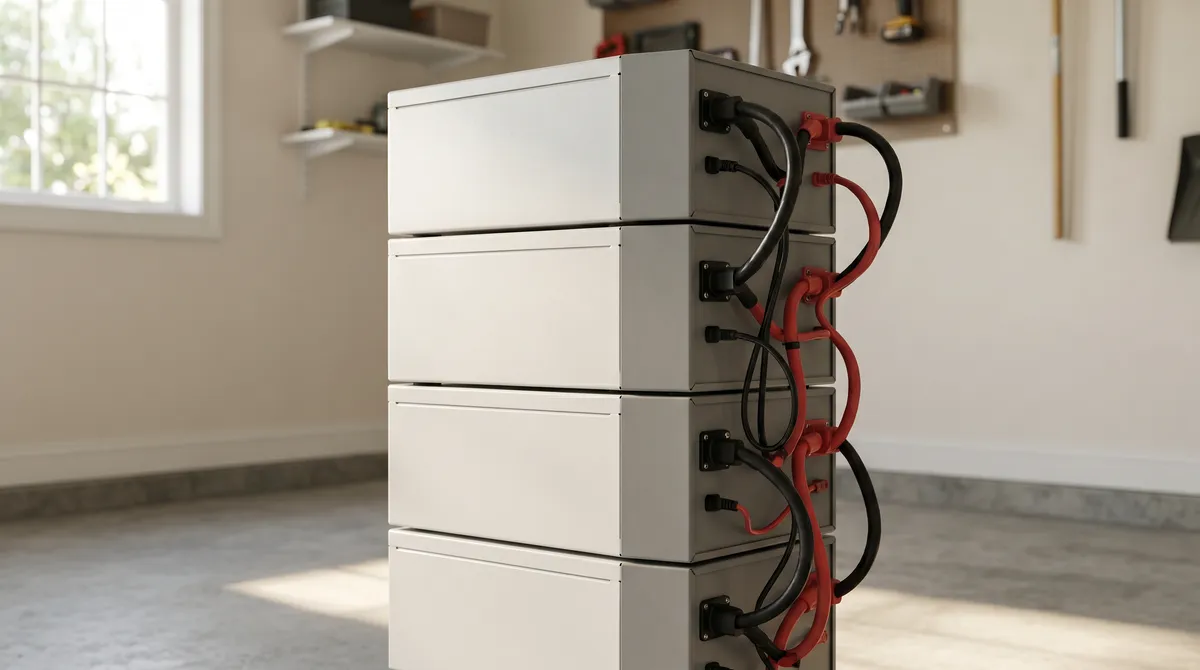
What LiFePO4 is really worth
The numbers that matter when comparing home battery chemistries.
- Life cycles 6,000+
One cycle = a full charge + discharge. At one cycle a day, 6,000 cycles add up to more than 16 years of daily use.
- Depth of discharge 95–100%
LiFePO4 discharges almost completely without degradation. The entire rated capacity is genuinely usable, unlike lead-acid (50%).
- Thermal safety The most stable
LiFePO4 won’t ignite if overheated or overcharged, unlike NMC. The built-in BMS continuously monitors temperature, voltage and current.
- Temperature range −10 to +45 °C
Works in the conditions of a Belgian garage or cellar. No risk in winter as long as the space stays frost-free.
- Efficiency 92–95%
Round-trip efficiency (charge + discharge) reaches 92 to 95%. Very few losses between the energy stored and the energy returned.
- Recyclability Recyclable
LiFePO4 contains neither cobalt nor nickel. Its materials (iron, phosphate, lithium) are recyclable through a dedicated channel.
* Indicative values for mainstream-grade LiFePO4 cells. Exact performance depends on the manufacturer and the BMS.
LiFePO4 vs NMC vs lead-acid
Three battery chemistries, three philosophies. LiFePO4 dominates the residential market for good reasons.
LiFePO4 — the benchmark
- Maximum thermal safetyNo risk of thermal runaway, even in the event of a fault.
- 6,000+ cyclesTwice as many as NMC for the same cycle count.
- Deep discharge without degradation95–100% of the capacity genuinely usable, every day.
- Cobalt-freeNo controversial rare metals, and a simpler recycling chain.
NMC & lead-acid — alternatives
- NMC: higher energy densityNMC stores more per kg — an edge for mobility, less critical on a wall.
- NMC: a few premium brandsTesla Powerwall (NMC) remains a benchmark, despite fewer cycles.
- Lead-acid: low entry costLead-acid batteries are cheaper to buy, but last 3× less.
- LiFePO4: heavier than NMCWeight is higher for the same capacity — no impact on a wall.
Is LiFePO4 right for you?
For home storage, it’s the default choice. A few cases where it really shines:
-
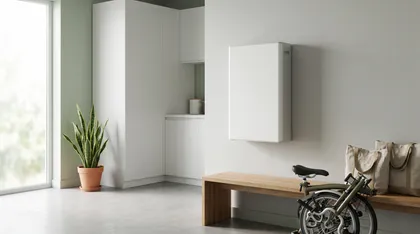
Residential solar storage
The number-one case: storing the day’s solar surplus for the evening. LiFePO4 absorbs a daily cycle for more than 15 years.
-
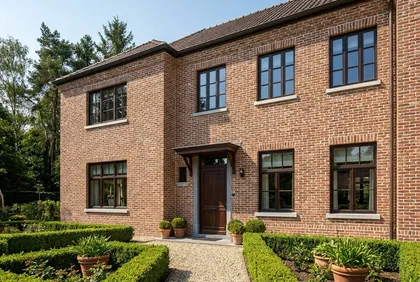
Backup / power-cut protection
The thermal stability of LiFePO4 makes it ideal for backup: it has to work at any moment, in complete safety.
-

Scalable installation
Modular systems (BYD HVS/HVM, Huawei LUNA) use LiFePO4 in stackable modules. You expand without replacing everything.
Capacity depends on your evening consumption. See our solar battery page for sizing, or the home battery page for complete solutions.
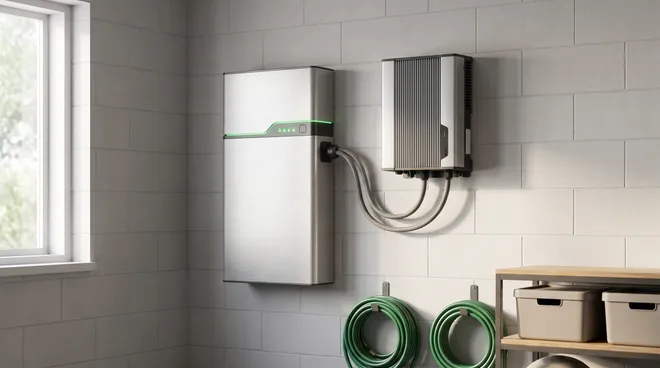
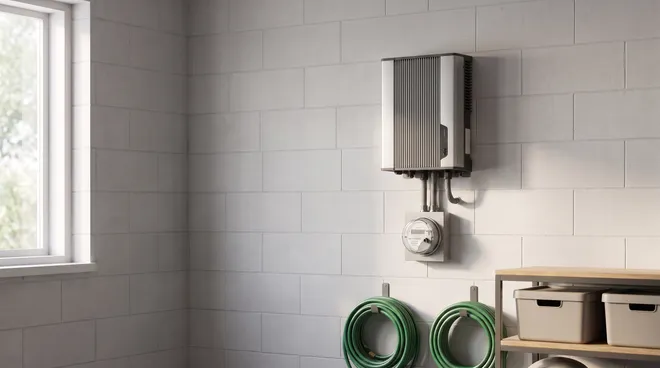
A 10 kWh LiFePO4 battery to capture the solar surplus
A household with 6 kWp of panels and 55% exported to the grid. We added a 10 kWh LiFePO4 battery: self-consumption rose from 45% to 82%, and the midday surplus now powers the evenings.
- 82%self-consumption
- 10 kWhLiFePO4
- 6,000+guaranteed cycles
LiFePO4, NMC or lead-acid?
The table to compare the three battery chemistries available for residential use.
| Critère | LiFePO4Vous êtes ici | NMCVoir la gamme → | Lead-acidVoir la gamme → |
|---|---|---|---|
| Life cycles | 6,000+ | 3,000–5,000 | 1,500–2,000 |
| Safety | The most stable | Good (BMS) | Stable |
| Depth of discharge | 95–100% | 90–95% | 50% |
| Energy density | Good | Better | Low |
| Price per kWh | Mid-range | Comparable | The gentlest |
| Cost per cycle | The lowest | Mid-range | The highest |
| Ideal for | Residential, safety, long life | Compactness, premium brands | Budget, off-grid |
- the system
Solar battery
The complete page on storage: sizing, returns, how it works.
All about storage → - the solutions
Home battery
Complete systems (BYD, Huawei, SolarEdge) and what sets them apart.
See the solutions → - the controller
Hybrid inverter
The hybrid inverter controls the battery. Essential for storage.
See the inverters → - backup
Backup storage
The safety of LiFePO4 makes it ideal for backup during a power cut.
See backup → - to combine
Solar kit
Combine panels and a LiFePO4 battery to maximise self-consumption.
See the kits → - ↑ category
All things solar
An overview of our solar panels across Belgium.
Back to the solar guide →
How much does a LiFePO4 battery cost?
The price depends on capacity and on the complete system (battery + hybrid inverter). Here are some benchmarks.
See storage prices & returns →* Indicative ranges for installed equipment. Returns depend on your consumption profile.
- LiFePO4 battery 5 kWh from €3,500module only, inverter not included
- LiFePO4 battery 10 kWh €5,500–8,000with hybrid inverter
- Extension +5 kWh €2,500–4,000additional module
- Reduced VAT 6%for renovation (home > 10 years old)
Your questions about lithium iron phosphate
Is LiFePO4 dangerous? +
It’s the safest lithium chemistry. No risk of thermal runaway or ignition, even when overcharged or faulty. The built-in BMS monitors each cell continuously.
How long does a LiFePO4 battery last? +
Over 6,000 cycles, which is well beyond 15 years at one cycle a day. Most manufacturers guarantee 10 to 15 years with at least 70–80% of the capacity remaining.
Why not NMC like Tesla? +
NMC is more compact (an advantage in a vehicle) but less stable and lasts fewer cycles. For a wall battery that cycles every day for 15+ years, LiFePO4 is more economical over time.
Can you install a LiFePO4 battery in an unheated garage? +
Yes, as long as the temperature stays above −10 °C. In Belgium, a standard garage is fine. The BMS reduces power if the temperature drops too low.
How is a LiFePO4 battery recycled? +
Through a dedicated recycling channel: the iron, phosphate and lithium are recovered. No cobalt or nickel to extract. The manufacturer or installer arranges end-of-life collection.
Which LiFePO4 capacity is right for my home? +
We size it on your evening consumption. For a household, 5 to 10 kWh generally cover most evenings. We calculate it precisely at the quote stage.
Get your free battery quote within 48 hours
Free consumption study, precise sizing, verified subsidies. Describe your project in under a minute.
- Free and with no obligation
- Sized on your real consumption
- Installed by our certified fitters