

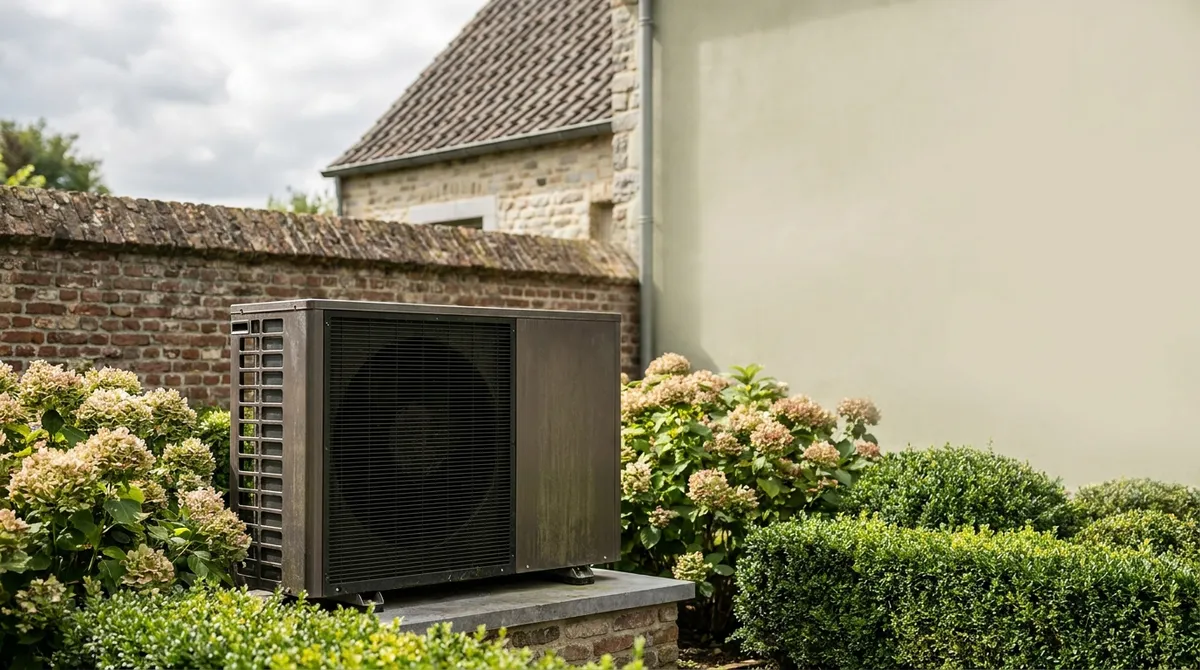
Installing a heat pump means betting on two decades of low-cost heating. But how long does it really last, and what separates a heat pump that gives up at twelve years from one still heating at twenty-five? A heat pump’s longevity is no stroke of luck: it is built from the moment of installation, then cultivated year after year.
How long does a heat pump last?
A quality heat pump, correctly installed, lasts 15 to 20 years on average. With accurate sizing and regular maintenance, many units comfortably pass the 20-year mark, even 25. That is comparable to a modern gas boiler — except that a heat pump consumes far less energy across its entire lifespan.
This is the average lifespan of a well-maintained heat pump. A unit serviced every year and correctly sized often exceeds 25 years of service.
Not all types of heat pump age at the same rate. Geothermal stands apart: its indoor unit lasts 20 to 25 years, but its buried ground loops, which endure neither weather nor mechanical cycling, routinely exceed 50 years. This is one of the great strengths of geothermal, whose higher installation cost is offset by exceptional longevity.
Air-to-air, air-to-water, geothermal: each with its own horizon
- Air-to-air heat pump: 15 to 20 years on average. It is the most exposed, its outdoor unit takes the brunt of frost, rain and heat.
- Air-to-water heat pump: 15 to 20 years as well, sometimes more because it often runs at a more stable rate.
- Geothermal heat pump: 20 to 25 years for the unit, 50 years and more for the buried ground loops.
The compressor, the part that decides everything
At the heart of every heat pump sits the compressor. It compresses the refrigerant and makes heat production possible — and it is also the most heavily used part, therefore the most decisive for the unit’s longevity. When we talk about a heat pump’s lifespan, we are in fact, most often, talking about the lifespan of its compressor.
What wears it out fastest is not the hours of operation but the start-stop cycles. An oversized heat pump heats too quickly, stops, restarts, and multiplies these jolts that fatigue the compressor. Conversely, a well-sized heat pump runs for long stretches at a moderate rate: it wears out less. This is precisely why sizing matters as much as the brand.
What lengthens — or shortens — the lifespan
Four factors make all the difference between a heat pump that lasts and one that fails prematurely.
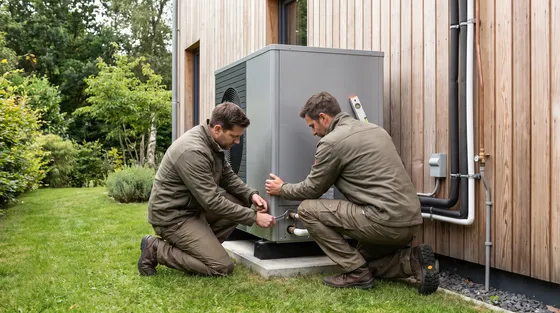
- Annual maintenance. This is the number one lever. A regular check keeps efficiency up, spots weaknesses before a breakdown and often preserves the manufacturer’s warranty.
- Sizing. A machine matched to the home’s real needs avoids the short cycles that exhaust the compressor.
- The quality of the equipment. A unit from a recognised brand, with robust components, ages better than a bottom-of-the-range product.
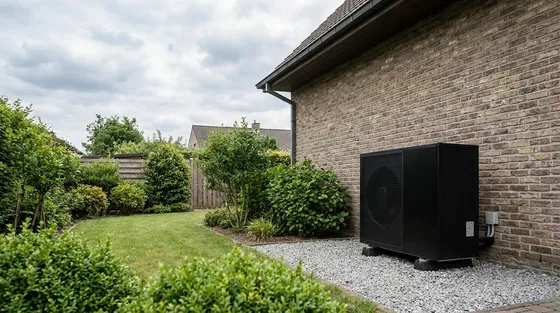
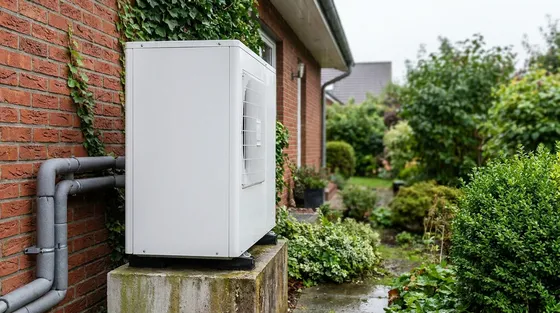
- Operating conditions. An outdoor unit that is well ventilated, sheltered from debris and properly protected from frost lasts longer.
Regular maintenance preserves efficiency, prevents breakdowns and is often a condition for keeping the warranty. It is the most profitable investment for gaining years of service.
See the maintenance guide →Warranties: compressor, parts and labour
A heat pump warranty is never a single block. You need to read the detail, because the durations vary widely from one item to the next.
The three levels of warranty
- Compressor warranty: this is the longest, because it is the key part. Depending on the manufacturer, it often runs from 5 to 10 years.
- Parts warranty: it covers the other components (control board, circulation pump, sensors, etc.) and generally extends over 2 to 5 years.
- Labour warranty: the shortest, it covers the installer’s call-out and time, often over 1 to 2 years.
Warranty extensions
Many manufacturers offer a warranty extension, sometimes up to 7 or 10 years on the whole machine. Be careful: it is almost always conditional on annual maintenance carried out by an approved professional, with proof on file. Skipping a single service can be enough to void the extended warranty. That is one more reason to take out a maintenance contract from the moment of installation.
Recognising the signs of ageing
A heat pump does not stop overnight: it gives warning. Here are the signals that should raise the alarm, especially beyond fifteen years of service.
- Consumption rising with no change in habits or weather.
- Declining comfort: the house takes longer to heat, the hot water weakens.
- More frequent breakdowns, and repairs that follow one after another.
- Unusual noises at the compressor or the fan.
- Repeated short cycles, a sign that the machine is struggling to regulate.
Repair or replace: how to decide?
As long as a heat pump is young and the fault is isolated, repair is almost always the right call. The question is different after 15 years: if repairs pile up and efficiency drops, the calculation quickly tips towards replacement. A recent heat pump consumes less, benefits from fresh warranties and qualifies for the grants in force — all of which quickly make replacement pay off rather than struggling on with a tired unit.
2026 price ranges by heat pump type, the factors that swing the bill and regional grants — to budget with peace of mind, whether installing or replacing.
See the price & grants guide →How to extend the life of your heat pump
The good news is that longevity can be steered. Three habits are enough to get the most years out of your installation.
- Have your heat pump serviced every year. This is the move that preserves efficiency, the warranty and the lifespan all at once.
- Take out a maintenance contract. It guarantees regular follow-up without having to think about it, and provides the proof required by extended warranties.
- Stick to correct sizing from the outset. A machine matched to the home wears out less — hence the importance of a serious study before buying.
Maintaining a heat pump well does not call for excessive effort: a single annual appointment is enough to turn a fifteen-year machine into a twenty-five-year one.
The 30-second recap
- A quality heat pump lasts 15 to 20 years, up to 25 with good maintenance.
- Geothermal lasts 20-25 years for the unit, 50 years and more for the ground loops.
- The compressor is the key part: short cycles wear it out, correct sizing protects it.
- Three warranties to read: compressor (5-10 years), parts (2-5 years), labour.
- Annual maintenance is the number one lever — and often a condition for the extended warranty.
Guide verified in May 2026 · updated every year