


Heat pump in renovation
An old, poorly insulated home with cast-iron radiators does not rule out a heat pump: it calls for an honest diagnosis. We measure your real flow temperature, decide between a high-temperature heat pump, a standard heat pump with insulation first and a hybrid solution, then replace your oil or gas boiler without oversizing.
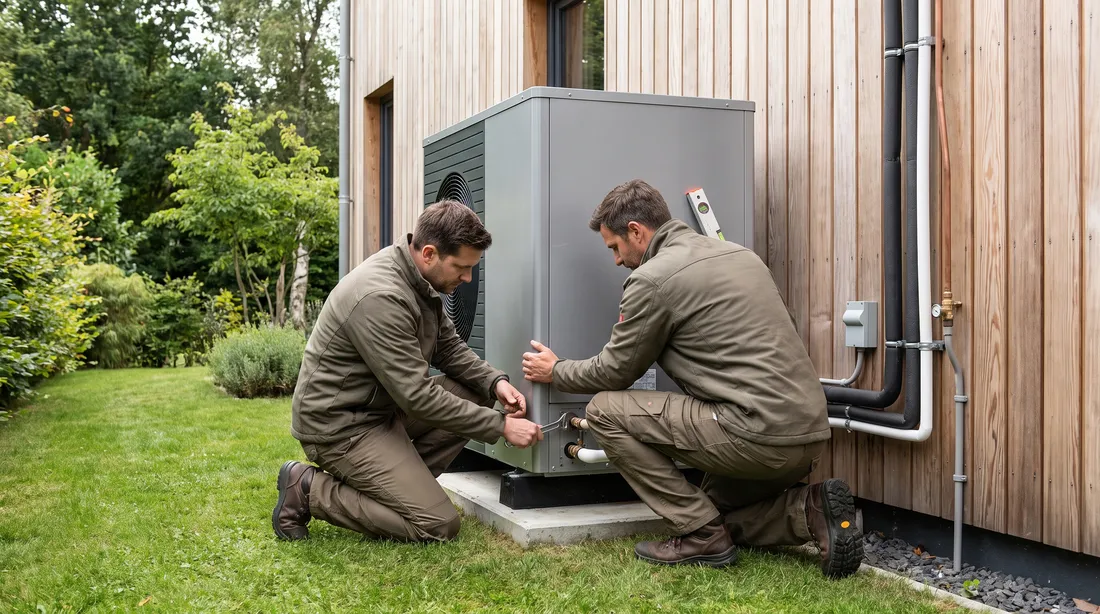
Why renovation changes the game for a heat pump
In a building from before 1990, the heat pump does not just replace the boiler: it has to cope with high heat losses and radiators designed for very hot water. The whole challenge is to lower the flow temperature — through insulation, through the right equipment, or through a hybrid approach.
The flow temperature, the real issue
A fossil-fuel boiler often sends water at 65–75 °C into old radiators. A heat pump performs better the lower that flow temperature is. We measure the real operating regime of your installation before choosing anything.
Insulation first, where possible
Insulating the roof, draught-proofing and tackling thermal bridges drops both the demand and the flow temperature needed. A few targeted works often make a standard heat pump compatible — more economical than a high-temperature one.
Replacing oil or gas
Getting rid of an oil or gas boiler is the condition for the regional grant and the chance to start again on a sound basis: cleaned circuit, sludge removal, expansion vessel and controls suited to the new generator.
From the audit to choosing the right heat pump
-
Audit & survey of the emitters
Technical visit: heat-loss calculation, state of the insulation, type and area of the radiators, measurement of the real flow regime on the existing installation.
-
Costed scenarios
We compare three routes — standard heat pump after insulation, high-temperature heat pump on kept radiators, or hybrid heat pump + boiler — with their cost, expected efficiency and the corresponding grant.
-
Works & boiler removal
Removal of the oil/gas boiler, sludge removal from the circuit, installation of the heat pump and connection to the emitters kept or replaced depending on the chosen scenario.
-
Tuning the heating curve
Fine adjustment of the heating curve to aim for the lowest flow temperature your radiators tolerate, then monitoring over the first weeks of the heating season.
Keeping your radiators: two possible routes
When insulation stays limited and the radiators require a high flow temperature, two solutions avoid replacing everything. The high-temperature heat pump goes up to 65–70 °C and works on its own, at the cost of a more modest COP in winter. The hybrid combines a heat pump with the existing boiler: the heat pump handles most of the season, the boiler takes over during cold snaps.
- High-temperature heat pump: radiators kept, 100% electric operation, lower COP in severe cold
- Hybrid: heat pump + boiler, automatic switchover at peaks, smooth transition with no major emitter works
- Underfloor heating or low-temperature radiators: better COP, but heavier works
We come and measure your real flow temperature and the state of the insulation, then give you costed scenarios, grant estimated.
Heat pump in renovations
Can you install a heat pump in an old, poorly insulated home?
Yes, but the diagnosis is decisive. The more heat the home loses and the higher the flow temperature the radiators need, the more the heat pump will struggle in winter. The right approach is to measure the real flow regime, improve the insulation where it pays off, then choose between a standard, high-temperature or hybrid heat pump. A heat pump fitted blind in a thermal sieve disappoints; well sized, it heats very nicely.
Do I have to replace my existing radiators?
Not necessarily. Many old radiators, especially cast-iron ones, have a large heat-exchange surface and accept a lower flow temperature than you might think. We check radiator by radiator: some are fine as they are at 50–55 °C after insulation, others are worth replacing with low-temperature models. A high-temperature heat pump also lets you keep everything by going up to 65–70 °C.
Should I insulate before installing a heat pump?
That is ideal when the budget allows. Insulating the roof and tackling thermal bridges lowers the demand and the flow temperature needed, which makes a standard heat pump — more efficient and cheaper — compatible with your emitters. If insulation is not feasible in the short term, we steer towards a high-temperature or hybrid heat pump.
What is a high-temperature heat pump?
It is a heat pump designed to produce water at 65–70 °C, i.e. the regime of old radiators. It avoids replacing the emitters, which simplifies the renovation. In return, its efficiency (COP) drops faster in severe cold than a low-temperature heat pump: it is justified above all when insulation stays limited and keeping the radiators takes priority.
When is the hybrid heat pump relevant?
The hybrid combines a heat pump with your existing gas boiler. The heat pump covers the vast majority of the heating season, and the boiler only kicks in during cold snaps, where a heat pump alone would consume a lot. It is an excellent transition for a home that is hard to insulate or runs at high flow: you sharply reduce fossil-fuel consumption without heavy works on the emitters. Note: keeping a fossil-fuel boiler can limit eligibility for some grants — we check case by case.
Signs your home is ready for a heat pump
The more boxes you tick, the better a heat pump will perform in your home. A few boxes missing rules nothing out: they point towards a high-temperature or hybrid heat pump.
- The roof (or the loft) is insulated, or you plan to do it
- Your radiators do not burn your hand: they already heat at a moderate regime
- You keep the home comfortable without running the boiler flat out in winter
- You have room outside for an outdoor unit (façade, garden, terrace)
- Your current heating is an oil or gas boiler due for replacement
- You are aiming for a stabilised bill and a gradual exit from fossil fuels
Heat pump — go further
An older home to switch to a heat pump?
Describe your home, your radiators and your current heating: we offer you an audit and costed scenarios, grant estimated, with no obligation.